Tuesday, November 22, 2022

Zuzana Pustaiová, One Day Every Day, Bratislava, Slovakia, 2022, ed. 300


This is a beautifully produced high gloss accordion that feels great in one's hands. However, it's not a straightforward accordion either, as it has a number of folded in fold outs that surprise the reader as you navigate the publication. Speaking about this new book Pustaiová said the larger themes were, "...about stereotypes and everyday life." Indeed, a majority of the photographs in the book depict daily activities and its objects, but usually with some kind of twist as well. But food, bodies and how we look and dress is the structure on which this accordion was constructed. It's a funny, amusing, and surreal sequencing of her cool photographs.

The book is accompanied with an essay by the photography curator, Branislav Stepanek, in which he expands upon the theme of book concluding, "The book could be an authentic testimony of a conformist rebel whose life taught them that any attempt to break the social rules conclusively means they will never fully fit in. It is about a path more difficult, the need to belong and, at the same time, not bending under the pressure of education, social bubbles, media, gender roles and even one's own social beliefs. Someone has truly taken this path. Only time will tell how viable it is."

62 double-sided pages, individually 9.5" x 6.5", 8' 6.5".

slipcover and the accordion


reverse side


back cover


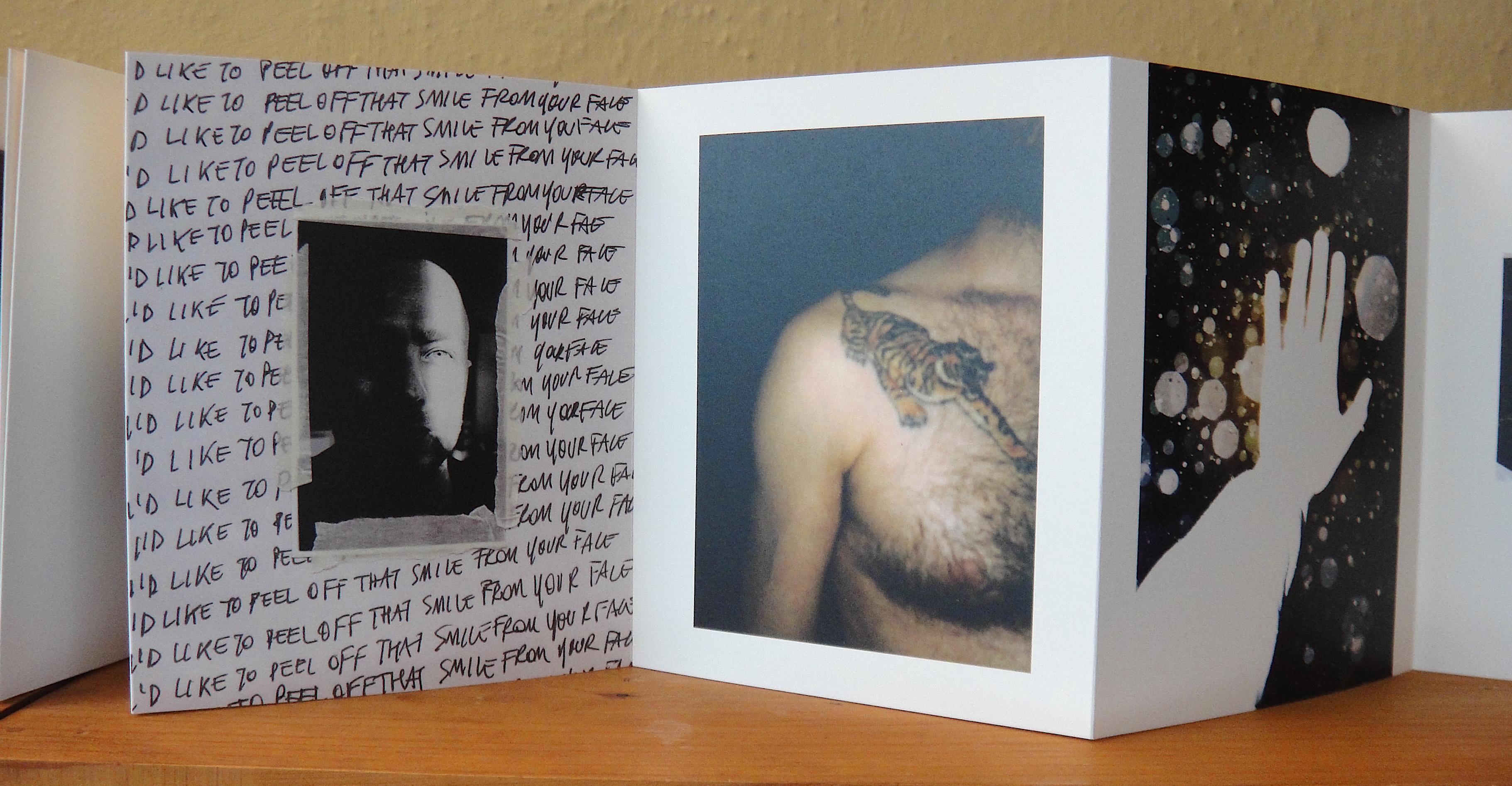
Marco Marzocchi, Oyster, Void, Athens, 2019, ed. 480


This is a really powerful photographic accordion book, with the feel of a family album, in which Marzocchi reckons with the legacy of his upbringing with his parents by splicing together a variety of different types of photographs. Created over ten years the artist states that: 

"This work represents my experience in recovering and understanding my parents, their life and their relationship with me. I never knew them well because they split when I was 6 years old, and they both died young. Drugs, addictions, jail and dysfunctional environment, these were constant elements. This work is focused on dealing with and replacing all the doubts and fears that I had. Exorcising the pain and searching for love."

The snake on the front cover is a reference to the 'Ouroborus', an ancient Egyptian and Greek symbol symbolizing the unity of all things, as well that of rebirth. The pacing of this book, the use of the white space of the page and the careful placement of the photographs, coupled with the varied types of imagery, all seem to be part of the larger work of the book — the creation of a new narrative of Marocchi's relationship with his parents, and the opportunity to move forward towards a more positive future, a rebirth of sorts.

84 single-sided pages, individually 6.5" x 5.25" and when fully opened 36' 9".


back cover


Monday, November 21, 2022

Picasso Gaglione, A Accordion Book, self-published, Knoxville, 2022


My mate Picasso Gaglione has been sending me a bunch of his DIY accordions over the last year or so, and some are more wacky than others (search this blog!). But this one combines a photograph of us both from when I visited Picasso in his lair deep in the Knoxville countryside, and I'm assuming he must have been showing me the latest issue of his artists' periodical Stampzine. To participate in this cool rubber stamp assembling zine, see below for submissions info: Stamplandchicago.com - Posts | Facebook

And then with the flick of a wrist the attached accordion comes to life. Nice one, Picasso!

6 single-sided pages, size 1" x 1.5", and when unfolded 9".

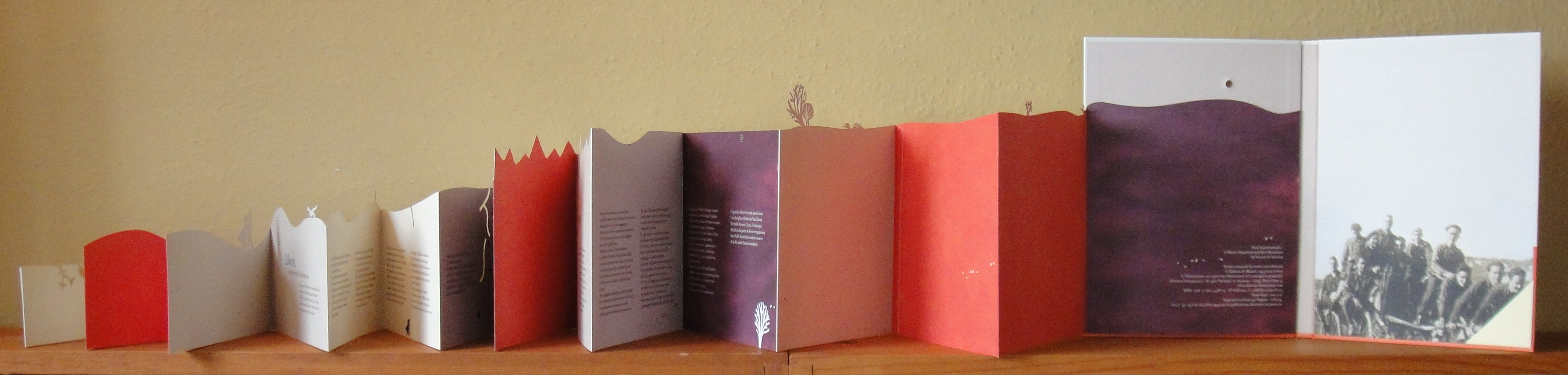
Paul Éluard, Liberté, Flammarion, Paris, 1945/2012


This accordion is based on the poem of the same name by the well-known French Surrealist poet Paul Éluard (1895-1952). Written in 1942 in the dark days of the German occupation the poem consists of 22 quatrains. It's only in the final quatrain that Éluard plays his hand and specifically declares what he is writing about.

By the power of the word
I regain my life
I was born to know you
And to name you Liberté

One side of this French edition of the accordion reproduces the 22 quartrains that make up the poem, and the other side features cutouts at the top of the pages, along with information about the German occupation, an appreciation of Éluard as an 'engaged poet', and a recounting of how this resistance poem would become so well known. 

This accordion's rather unique design was conceived by Anouck Boisrobert and Louis Rigaud.

20 double-sided pages, page height is variable, width 7.5", when fully open 12ft 6".


back cover

Sunday, November 20, 2022

Béatrice Coron, Excentric City, Editions des Grandes Personnes, Paris, 2014


In life as in cut-out paper, everything hangs together.
Quote by Coron on inside back cover

A really wonderful paper cut accordion from this well known and prodigious French artist who's published a large number of books featuring her cut paper works, as well as public art installations, animated films, and numerous solo & group exhibitions. Each page of this book is composed of narrative bands all telling different stories about the people and their varied activities in this 'excentric city' — all in the exquisite detail that Coron's work is known for.

Here's a good statement from Coron's website about her work and what's she trying to do with it:

"For the past 20 years, I have been exploring visual storytelling in artists' books, paper cutting and public art. Collecting memories from individuals and communities, I stage narrative allegories in silhouette to create a dialogue with the viewer in playful fantasies. 

These visual chronicles record archetypal stories that transcend time and space. My goal is to invite the public to pause and bring their own ideas finding personal interpretation to reclaim their imaginative powers.

My personal history fueled my curiosity for stories and questioned my perception of realities. I have been fascinated by the relation of people to their space and the sense of belonging. Using papercutting where everything is cut from a single piece of Tyvek, the profusion of individual stories make a coherent whole world." [https://www.beatricecoron.com/statement.html]

12 single sided pages, each 11" x 7.5" and when fully opened 7ft 6". Here's a link to another of Coron's works on this blog: accordion publications: Béatrice Coron, Excentric City, Editions des Grandes Personnes, Paris, 2014


back page

Thursday, November 17, 2022

R. Clarke-Davis, Untitled, Brazil, 2022

front cover

R. Clarke-Davis has been on the road again, this time to Brazil during the run up to the elections there, which thankfully Lula won. More folds than usual in this unexpectedly rich and compact accordion & folded book.

Of varying size, one side 4 pages, each 4" x 5.5", and another side 3 pages of same size. And then unfolding the pages results in sheets of 8, 16 and 12 images respectively. Expect the unexpected with Clarke-Davis' puzzle books.


back of above sheet
 

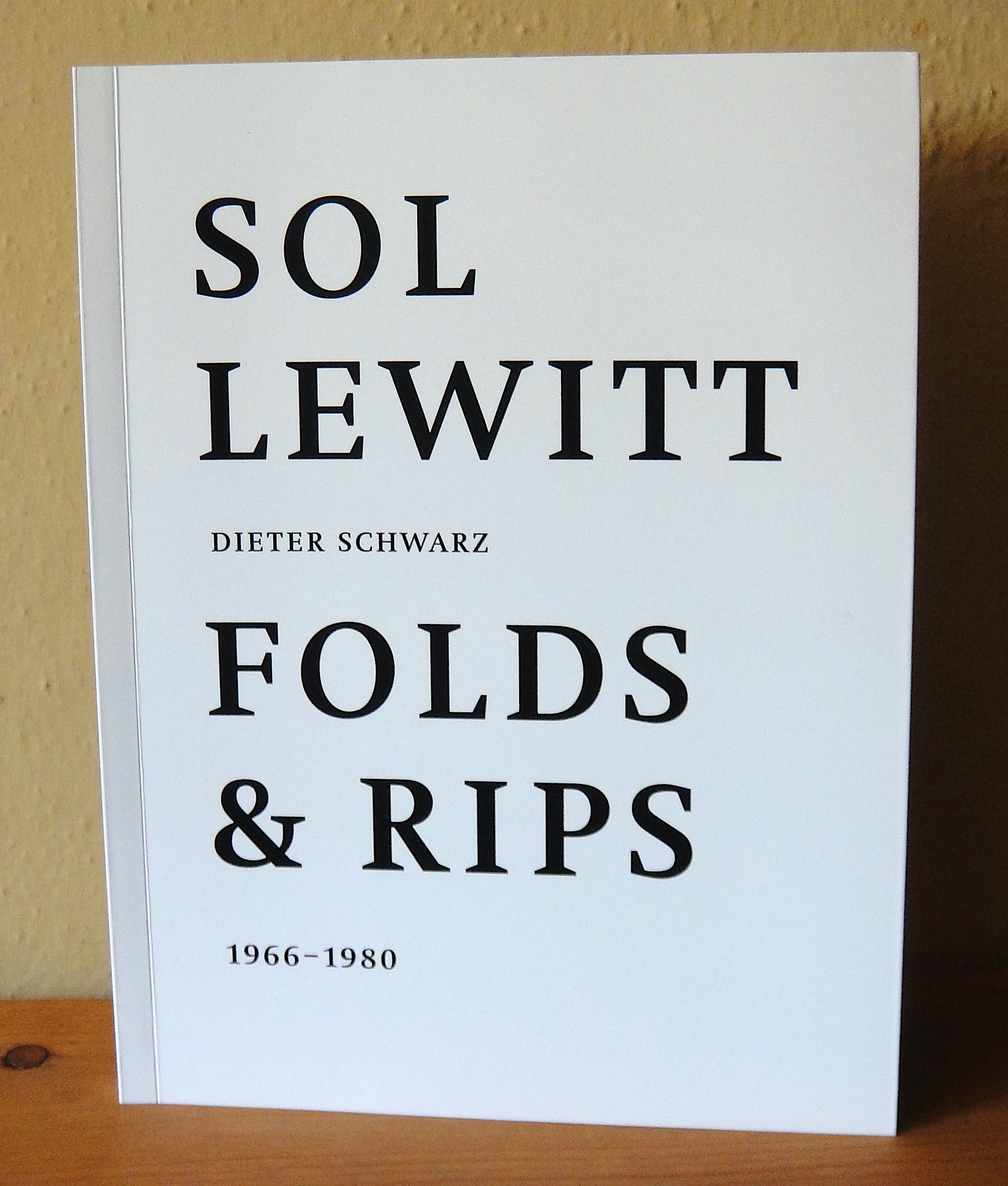
Dieter Schwarz, Sol LeWitt, Folds & Rips: 1966-1980, Walther Konig, Germany, 2020 and Veronica Roberts, Sol LeWitt, Not to be sold for more than $100, Radius Books, Santa Fe, 2020


The deeper I get into the world of accordions the more fascinated I become with the idea and nature of the 'fold', and how it transforms a simple piece of paper into a multi-faceted, and complex object. So, I was excited to discover these two recently published books that explore for the first time an ongoing activity of Sol LeWitt's that consisted of folding, ripping and cutting out sections of printed matter, that he created between the years 1966-1980. There's definitely a continuity between these works and his better known serial works, but these have an intimacy not found in the latter. A lot of the works were circulated within his friendship circles and their apparent simplicity belies the larger issues and themes that they raise.  

LeWitt (1928-2007) described these works as "...drawings without drawing" with lines being replaced by the folds in the paper, and both books explore in different ways the variety of themes and issues that all intersect in this simplest of activities - folding, ripping and cutting of paper.

Here's a link to an excellent article by Megan Liberty from the Brooklyn Rail (Oct. 2020) in which she reviews both books and explores their different coverage of this remarkable and relatively unknown activity of this important conceptual and minimalist artist: Sol LeWitt: Not to Be Sold for More Than $100 and Sol LeWitt: Folds & Rips – The Brooklyn Rail

Tuesday, November 15, 2022

Chuck Close, Scribble Book: Self Portrait, Steidl & Little Steidl, Gottingham, Germany, 2013

Slipcase for the two accordions and pamphlet about the printing process

A really interesting set of three publications from Chuck Close in which he uses the panoramic feature of the accordion to illustrate the process of making a print. Of this work he remarked, "The idea for my scribble self-portrait goes back to an exquisite corpse drawing I made for a show at the Drawing Center in 1993. I wanted to find a way to make a full-color image that was built out of pieces, or in stages, as a print would be made. So I scribbled in colored pencils one color at a time, layering the colors on top of each other, and made a little self-portrait head for the top part of this drawing. I did the process colors first: magenta, then cyan, then yellow and then I would see what else it needed. This is like most of what I do: it's a question of always getting it closer and closer. I sneak up on what I want." [volume 3]

The publishers statement for the trade edition summarizes well the particulars of this publishing project, "Scribble Book is a self-portrait that emerges step-by-step out of the printing process, one plate and one color at a time. The viewer follows a series of nine individual plate proofs (volume 1) along with a corresponding series of nine progressive proofs (volume 2). By comparing the plate proofs against the progressives, the viewer may ascertain not only the effect as one color is added to create the final nine-color-portrait, but also the compositional decisions and careful modifications made by the artist at each stage of the project."

Both accordions: 8 single-sided pages, individually 13.25" x 11", and when extended 7' 4".


the final print is on the right

In volume three Chuck Close describes the printing process