Sunday, August 21, 2022

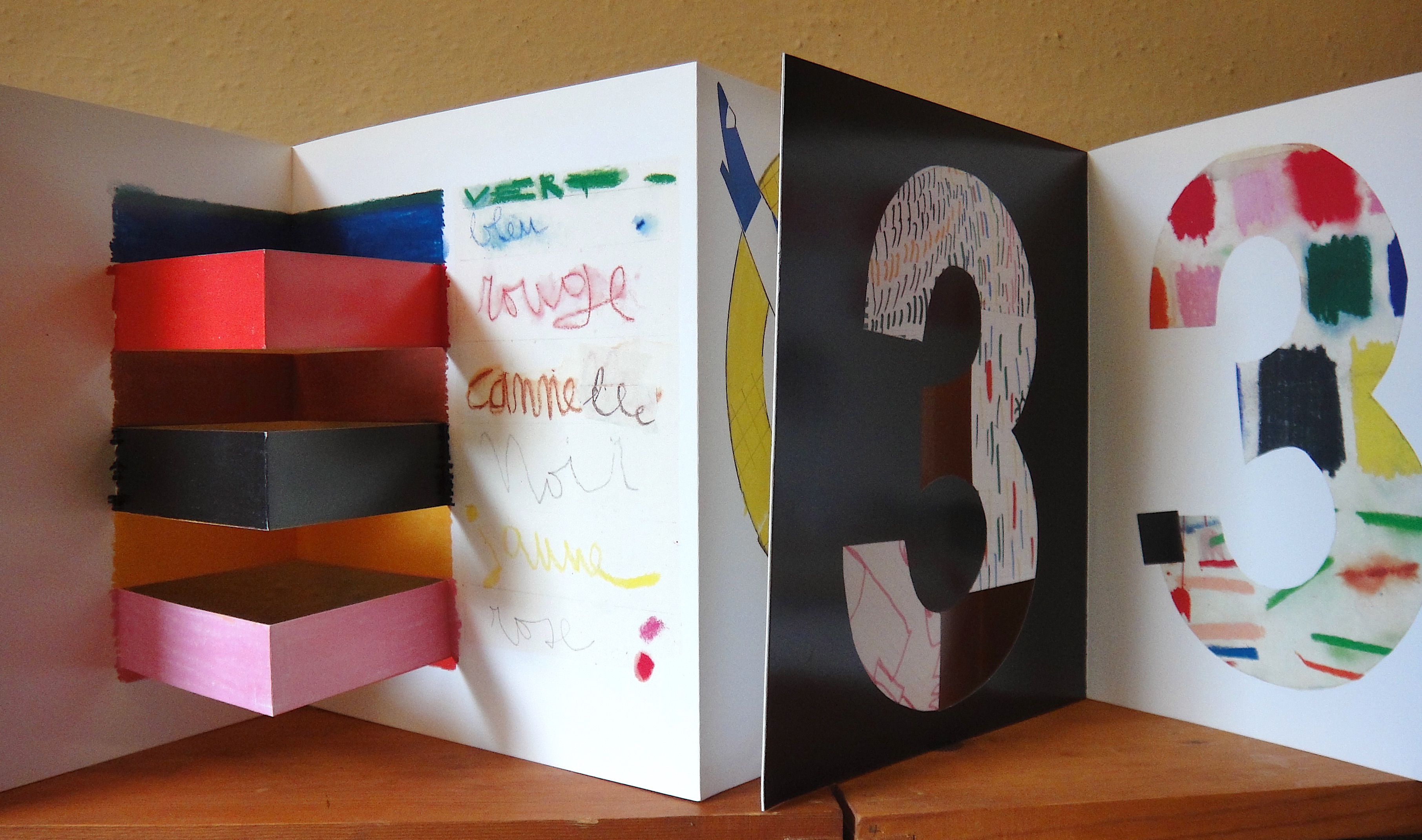
Květa Pacovská, Unfold/Enfold, Chronicle Books, 2004

book with wraparound cover

the accordion with front and back cover boards

Another wonderful accordion by this Czech artist, illustrator and graphic designer who's well known for her children's books. Follow this link to another book by Pacovská in this blog: accordion publications: Květa Pacovská, Couleurs du Jour (Les Grandes Personnes) [The Big People], Editions des Grandes Personnes, Paris, France, 2010

Each spread of paired pages presents some kind of visual and tactile surprise, and they are often accompanied by Pacovská's different varieties of play with the pages including cut-outs and assorted moving parts that spring out when the pages are opened. I wish I had been exposed to a book like this when I was a kid!

48 double-sided pages, individual pages 10.25" x 9.5", and when fully open 38ft.

upon opening the book the reader is invited to "make yourself small 
and enter here" — into the hexagon hole cut into the first page


reverse side of the book


back of book with wraparound cover

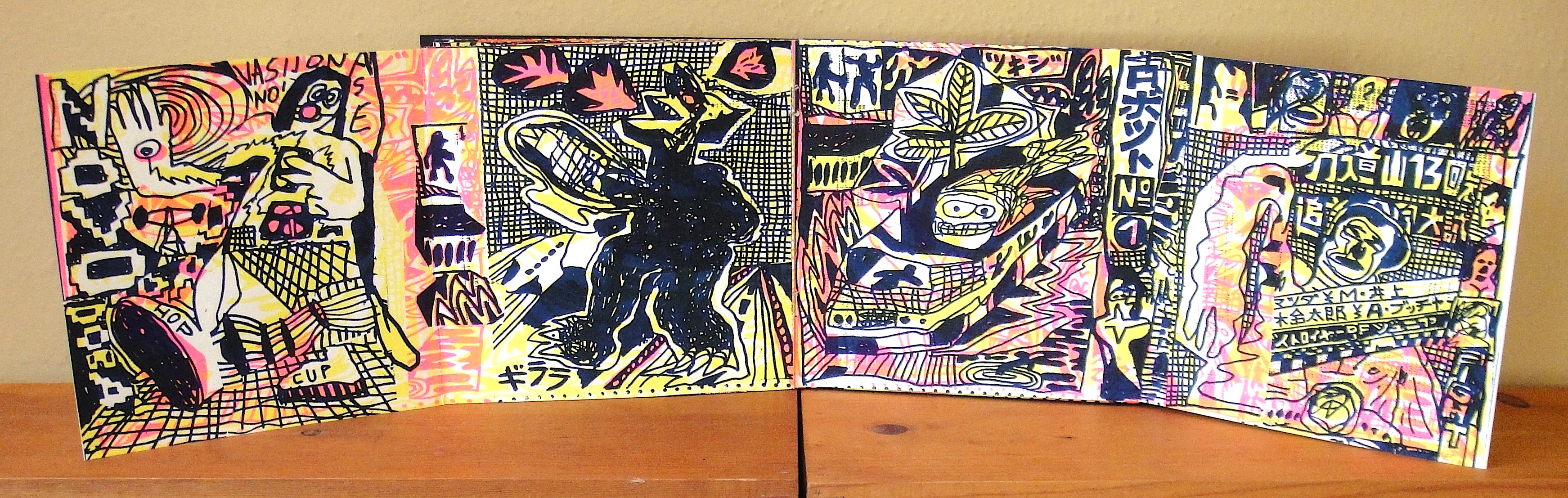
Vasijona, Maskulator, Le Dernier Cri, Marseille, France, 2022, ed. 500


Another wonderful silk screened book (nine colors) from Le Dernier Cri. While not technically an accordion, I love the way the folded pages of the publication open up to create four page spreads of visual mayhem!

12 double-sided pages, individual pages 8" x 8".


Saturday, August 20, 2022

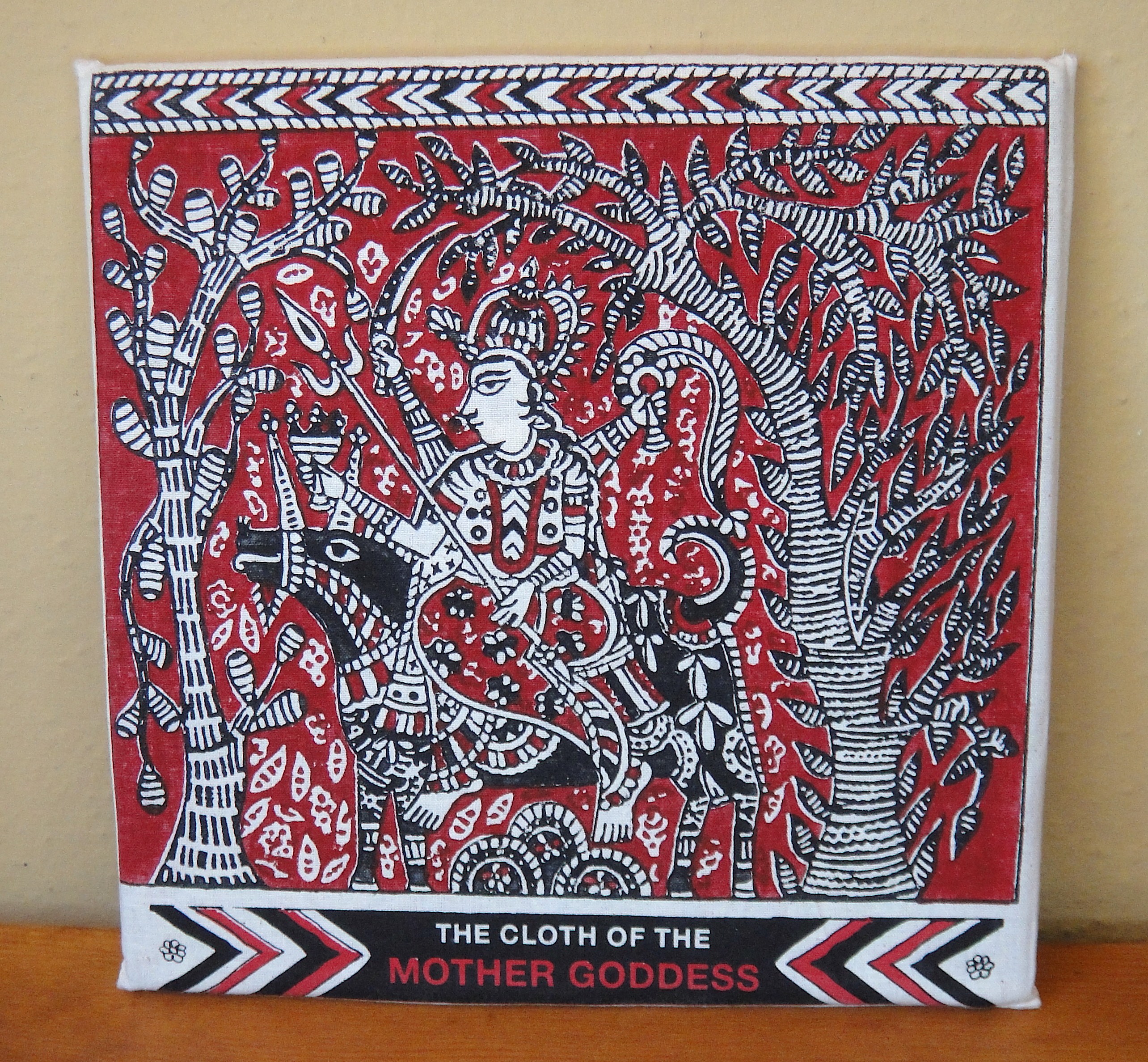
Jagdish Chitara and Gita Wolf (editor), The Cloth of the Mother Goddess, Tara Books, India, 2015, 1st edition, ed. 500

Front cover with cut-out view of cover of the book's cloth envelope

the front of the book's cloth envelope

reverse side of the envelope with statement about this publication


This double-accordion textile book with center panel, is a wonderful publication that uses a traditional votive cloth called Mata-Ni-Pachedi created by the Vaghari community of artists from the Gujarat region of north east India. The Vaghari have traditionally made this particular type of cloth dedicated to the Mother Goddess and this book is in effect a textile shrine that Chitara has created by using traditional wooden printing blocks that have been handed down within his family for generations. 

In the front panel the Mother Goddess is accompanied by her attendant gods and goddesses and their animals. On the reverse is the story of how the Mother Goddess came to be celebrated in this manner. Gita Wolf, the editor, provides an interesting overview of the book, the artist, the printing technique, the larger cosmology surrounding the Mother Goddess, as well as two videos at: The Cloth of the Mother Goddess - From Ritual Art to Cloth Book - Tara Books

The two publications that accompany the book fill out the rich history of this traditional art, including a storyboard that explains the people and events depicted in the book. In the second of the above videos Chitara addresses his hopes for the book saying, "This book...I want it to be a blessing that reaches people in far away places." I would say his wish has been granted — along with the help of Gita Wolf and the wonderful Tara Books!

6 double-sided pages (9.5" x 4.75"), center panel (9.5" x 9.5"), and when fully open 3' 2.5".

the front of the publication

the two accordion 'wings' of the book

work fully opened

center panel with the people and the Mother Goddess

reverse side

reverse fully open

two explanatory booklets that accompany the publication


Friday, August 19, 2022

VēDO Product Guide, VēDO Toys Ltd., 2014


This rather unique accordion is part of the much larger field of accordions that accompany & illustrate commercial, and in this case, personal products! 

For more information about VēDO products see: VēDO (@vedo.toys) • Instagram photos and videos

14 double-sided pages, 3.5" x 2.25", and when fully open 2ft 7.5".

front side


reverse side


Wednesday, July 6, 2022

Pierre Marty, HH, Le Dernier Cri, Marseille, 2009, ed. 2000

front cover

This 10 color silkscreen book with its multi-flap folded pages, is not technically an accordion, but when the pages are opened up some of the same effects can be seen and experienced as when viewing a traditional accordion. At the heart of the accordion book lies the 'fold,' and Marty's book playfully exploits all the surprises and unexpected encounters that happen when this feature is incorporated into the making of a book.

On his blog, Marty describes how he "...draws in different forms, produces comic strips, practices publishing on a very small scale...compulsively superimposes blacks, whites, day and sometimes colors, forming dreamlike universes that echo reality. Often wind, intestinal breaths on plants, organic or abstract shapes like ideograms, amoebas on the cornea, hair on the tongue, shivers, spasms haunt or invade his images and his narrations. The comic strips he produces do not tell a story as such, they contain little or no text, drawings follow one another in an articulated way, forming a narrative, poetic and plastic grammar."  [°)°)°)°)°)°)°)°)°)°)°))) Pierre Marty]

Another wonderfully edgy book from Le Dernier Cri!

18 double-sided pages, individually 8.25" x 6".

back cover

front and back covers opened up


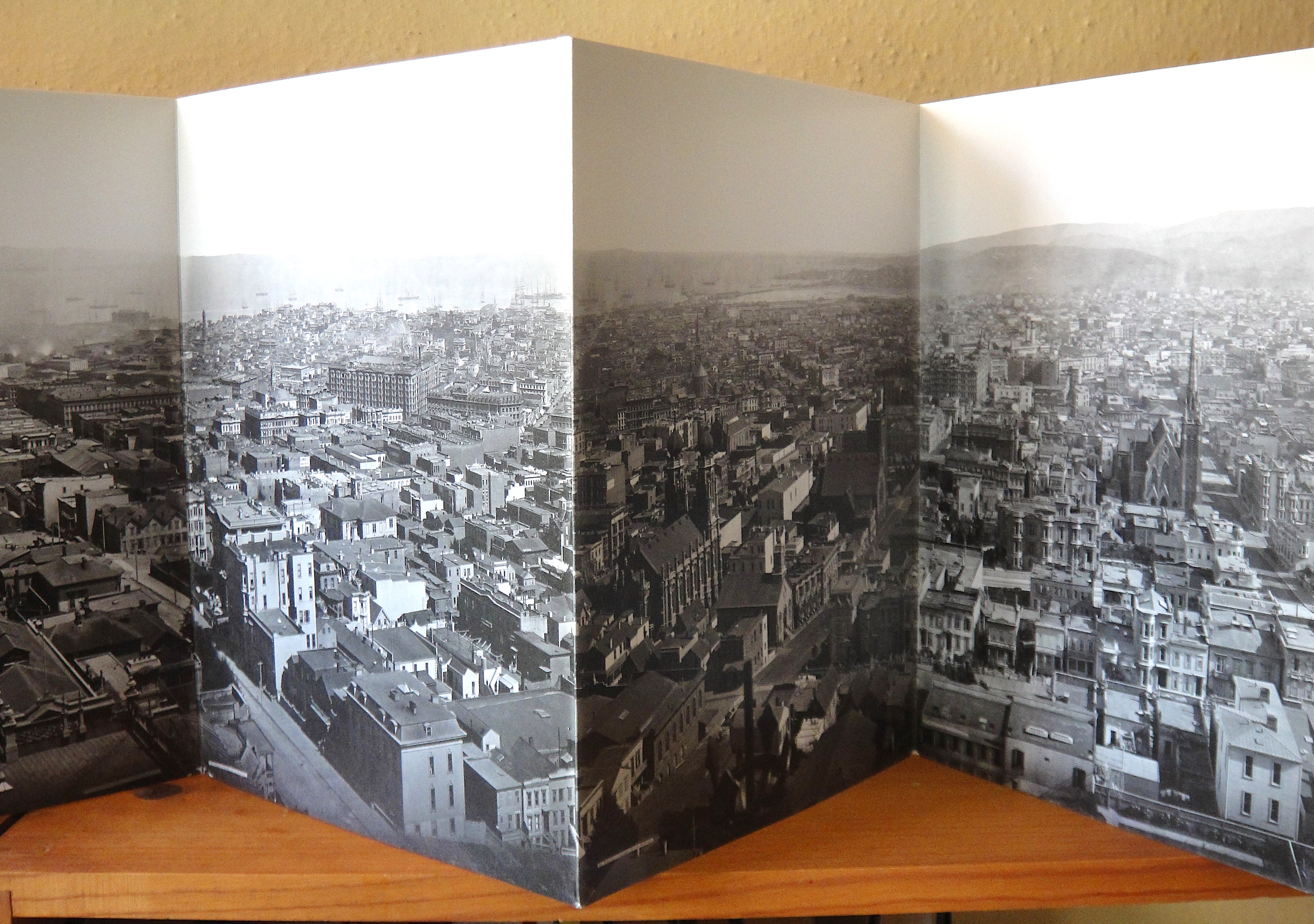
Eadweard Muybridge & Mark Klett, One City/Two Visions, Bedford Arts Publishers, San Francisco, 1990


A smart accordion that combines two panoramic views of San Francisco, with Eadweard Muybridge's (1830-1904) made in 1878 and Mark Kletts' created in 1990.

The accordion format is ideally suited to reproducing panoramic images and this book provides a prime example, even though Klett was unable to make his work in one shot because of the development of the city, and his solution was to stitch together single images to create his panorama.  However, both works were shot from the same location, the Mark Hopkins Inter-Continental Hotel on California Street.

Peter Bacon Hales provides a nuanced introduction to the technical issues and the larger history and development of San Francisco, and Mark Klett offers a text that describes his process and solutions to the issues that surfaced for him in creating a panorama of the city in this contemporaneous moment.

14 double-sided pages, individual pages 12" x 9", and when fully open 10ft 6".

Muybridge's (1878) panorama


Mark Klett's (1990) panorama