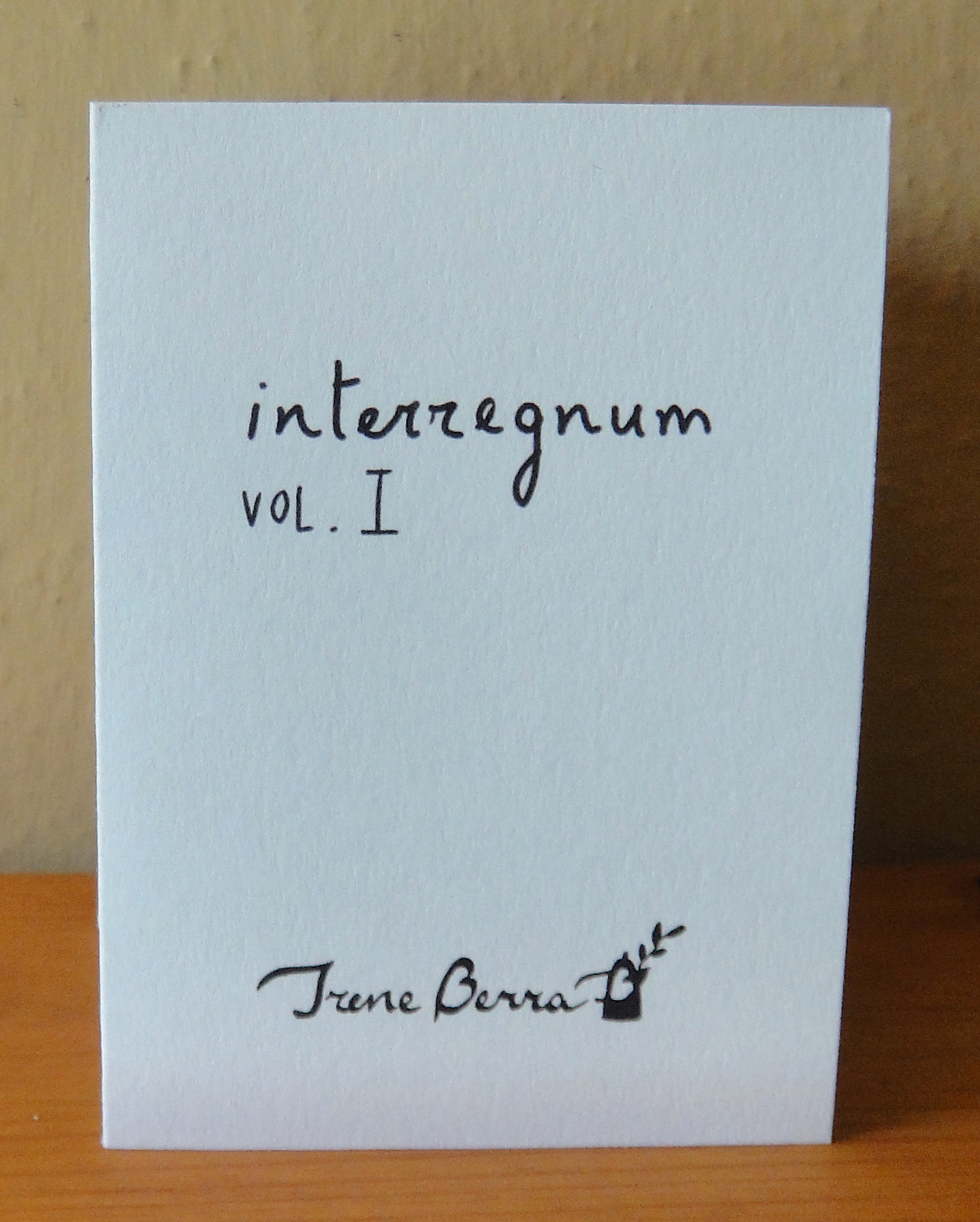
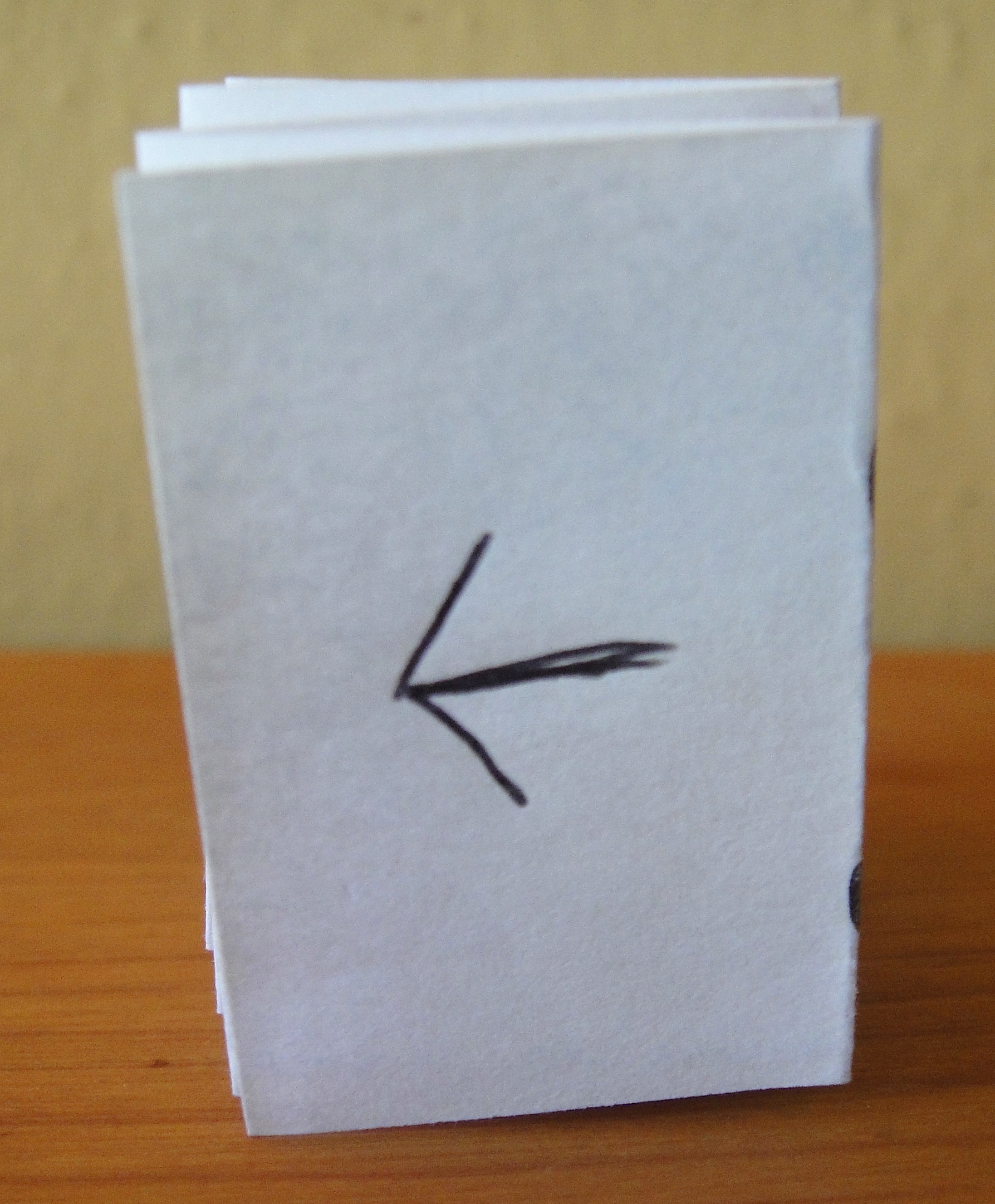
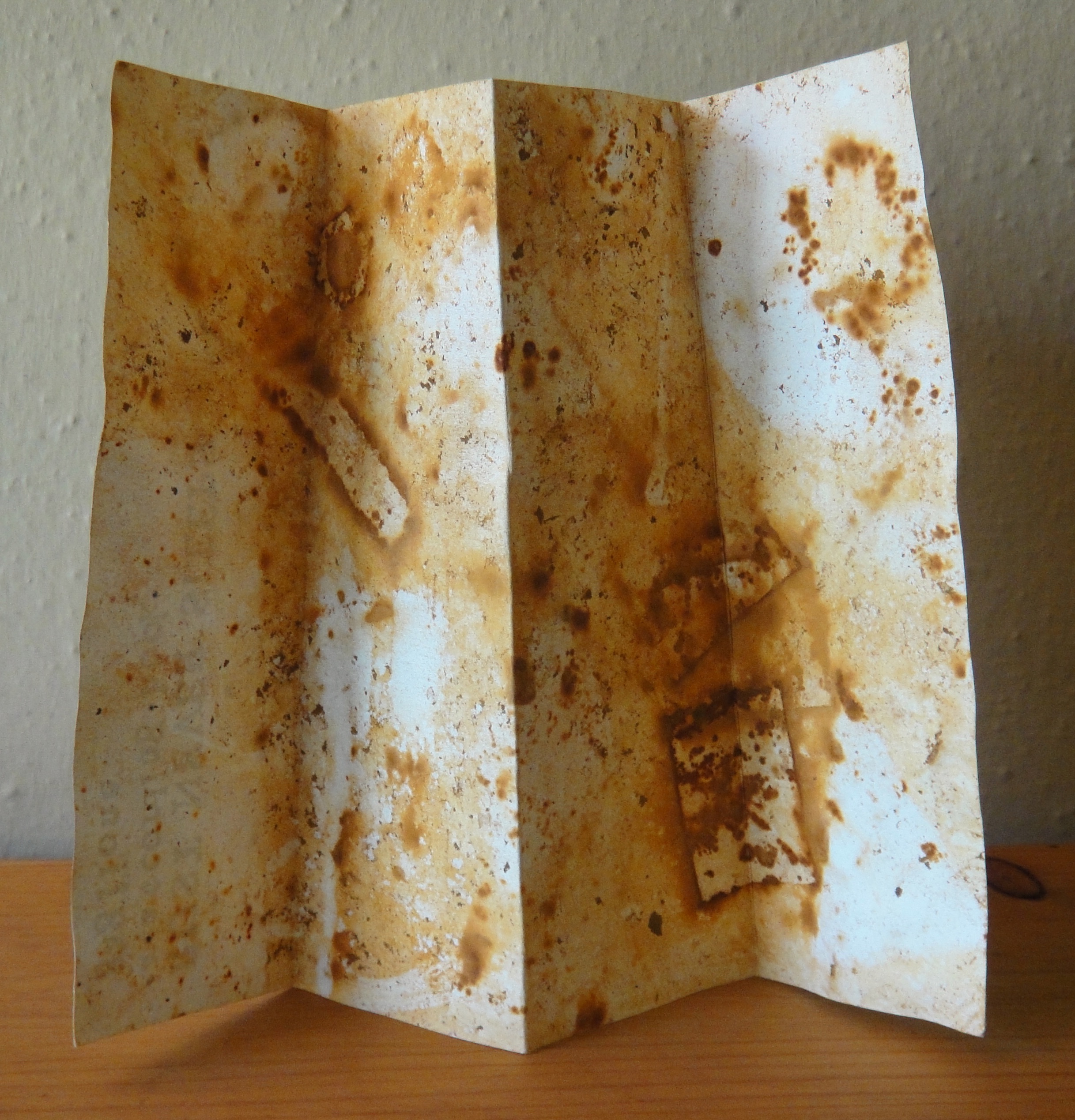
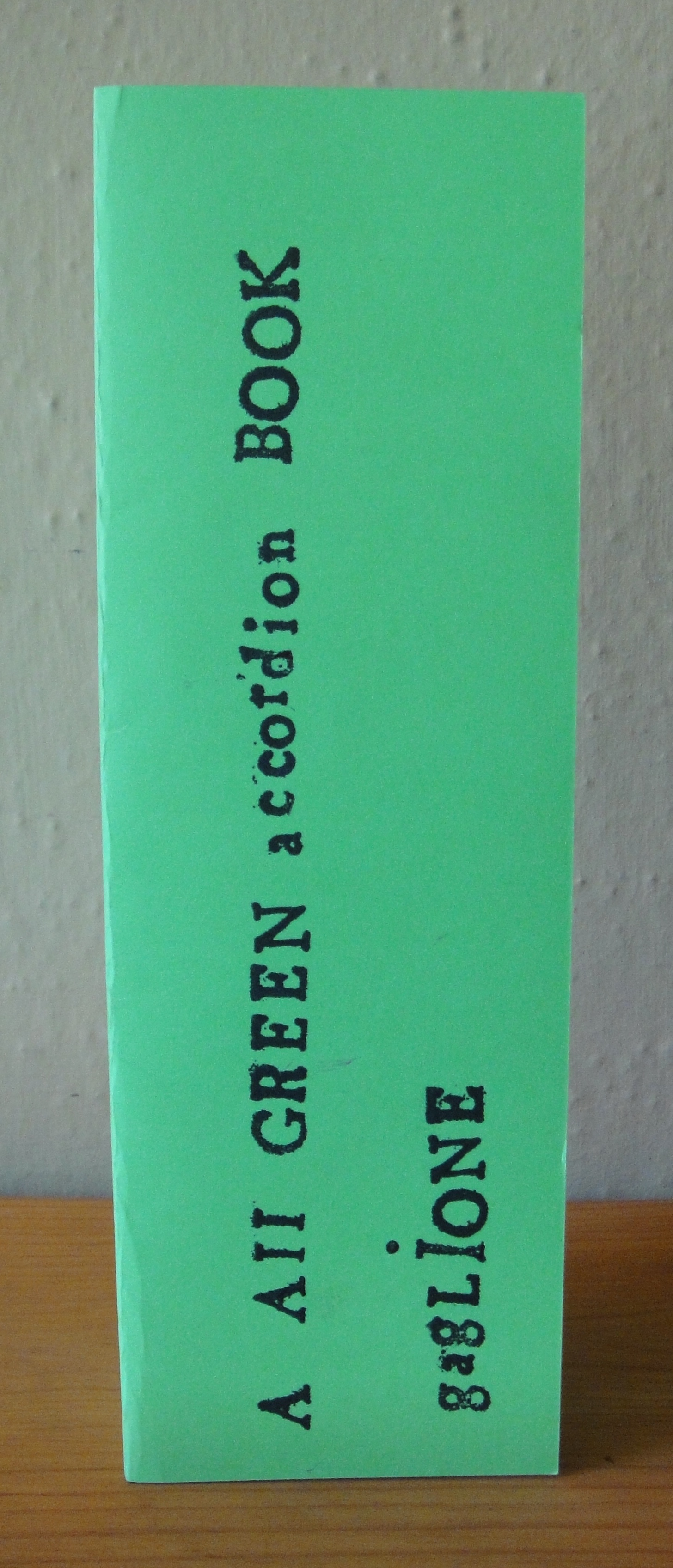
The accordion book has played an important role within the history of the book, as it served as the bridge between the scroll and the contemporary book (codex). But strictly speaking, an accordion is not really a book at all. If the following contemporary definition of a book defines it as "...a sheaf of pages fastened along one edge...,"(1) then we are obviously in a different territory with accordion books.
The accordion has not one, but multiple spines and comes with its most signature characteristic, its ability to open up, to unfold and expand indefinitely. Additionally, it can stand alone as a three-dimensional object while still retaining its legibility. The book offers the reader a single fixed point of view, while the accordion offers the reader both literally and metaphorically, a panorama of viewpoints.
Decoupling the accordion from its role within the larger history of the book, I want to explore other avenues through which to approach the accordion. But let's start with a definition of an accordion as:
"a length of paper with alternating equidistant folds that create parallel uniform-sized sections or pages."
Thus, an accordion is essentially a folded length of paper, often with front and back covers, or presented in a protective sheath.
Anne Boyer, in a review of the artist Hannah Wilke's recent retrospective,(2) addresses the centrality to her work of what Wilke called her "one-fold gestural sculptures,"(3) which were small vulva-like folded works that were made from a variety of materials. Boyer, in a particularly lucid passage responds to Wilke's folded works with an inquiry into the nature and definition of the 'fold' itself:
"Folding is the gestural equivalent of paradox, in that it takes what had neither inside nor out and, without transforming its substance, gives it both. Before a flat plane is folded, we know it as surface — superficial, exposed. Once a flat plane has become a fold, the same material becomes an intriguing half-secret — the fold alerts us to the once clandestine affordance of surface."(4)
Boyer continues examining the broader landscape in which Wilke's folded works are located, and notes the following:
"Important too to Wilke's work is that the fold is a gesture linked to feminized labor, what was once understood as "women's work": doing laundry, diapering, preparing dough. The efficiency of the fold, done over and over, mimics the ongoingness of folding as care work, while it simultaneously creates mystery out of shallowness, dimensional form out of apparent flatness."(5)
In opening up the activity of folding through the concept of 'feminized labor' Boyer also broadens the larger terrain within which folding is located. It becomes clear that folding, as in folding newspapers, letters, dish cloths, napkins, clothes and all the other myriad things we fold, is an activity deeply embedded, but largely unnoticed, within all of our everyday lives.
Brendan Murphy, Folding Linens, oil on wood panel, 2019
Locating the domestic sphere as an active site of folding links it to one of the key terms used to describe accordions, leporello. This name was coined after a character in Mozart's opera Don Giovanni (1787), in which Don Giovanni's numerous seductions are exposed by his manservant Leporello when he produces an accordion style list that he unfolds to reveal 2,064 names. The term leporello situates the genesis of this term firmly within the domestic realm, as well as connecting the making of lists to the larger history of the fold and accordions. Leporello's choice of the accordion format for his list was a wise one, as the accordion is eminently suitable for organizing large and small amounts of information in an economical and efficient format, both for storage and retrieval. No doubt we have all made shopping lists and folded them, to make them more manageable. Interestingly the term leporello has more currency in Europe than the USA, presumably because of its German and Italian origins.
The accordion's innate ability to expand and contract, and to fold and unfold is directly related to another popular name that has been ascribed to them, that of accordion as in the musical instrument. Analogous to the opening and closing of the pleats of the bellows of an accordion, one commentator has stated that the "...bellows can be compared to the role of breathing for a singer."(6)
The accordion's often unwieldy length presents the reader with both a physical and intellectual challenge. To hold, and then open up an accordion is to enter into a unique visual and literary relationship with a sculptural object. However, as long as the accordion is closed, it functions as a discrete book-like object and can be read page by page, like a traditional book. But once it's opened up it requires spreading one's arms in a kind of open embrace in order to take in the measure of the body of the accordion. Couple this with the expansion and contraction of its folds simulating that of a living breathing body, and you have an encounter shaped by a physical intimacy that's unique to the accordion.
In our interactions with accordions it's as if we have to fold them into our bodies in order to ensure their safety. And, like Hannah Wilke's folded vulvic works, our encounters with accordions make us aware of how our own bodies with their sheath of endless folds, both protects and nourishes us.
Stephen Perkins, 2022
Footnotes
1. Margalit Fox, "The Fine Print", The New York Times Book Review, review of "Index: A History of the Bookish Adventure From Medieval Manuscripts to the Digital Age," Dennis Duncan, Norton & Company, 2022, p. 16.
2. Anne Boyer, "Living as Art," Art in America, September/October, 2021, pgs. 38-47. Hannah Wilke was as American artist who was born in 1940, and died from cancer in 1993. The exhibition was: Hannah Wilke: Art for Life's Sake, Pulitzer Arts Foundation, Saint Louis, 2020-2021.
3. In, Nina Renata Aron, "Hannah Wilke's 'labial' artwork challenged both the patriarchy and feminists," at: https://timeline.com/hannah-wilke-labial-art-97c5bc488a67, accessed 3.21.22.
4. Ibid, Boyer, p. 40.
5. Ibid, Boyer, pgs. 40-41.
6. Wikipedia, en.wikipedia.org/wiki/Accordion, accessed, 3.23.22.
5. Ibid, Boyer, pgs. 40-41.
6. Wikipedia, en.wikipedia.org/wiki/Accordion, accessed, 3.23.22