Thursday, November 4, 2021

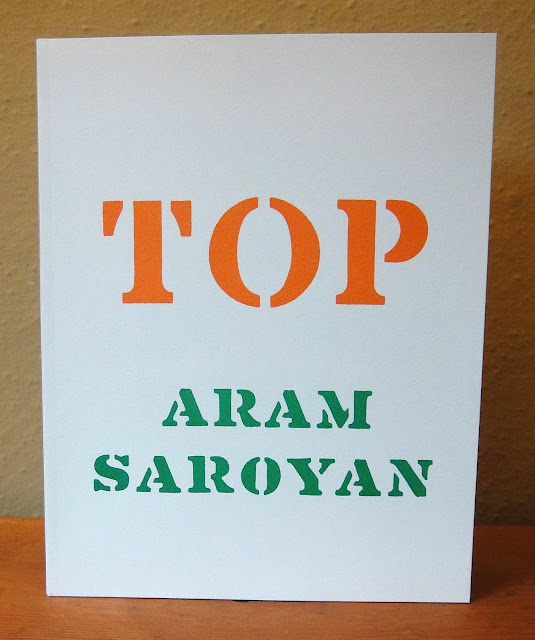
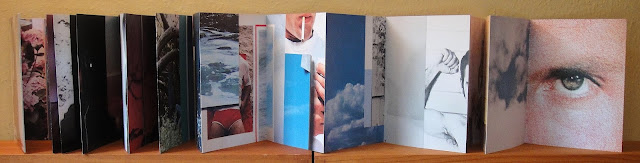
Aram Saroyan, Top, Primary Information, New York, 1965/2021, 1st edition/60, 2nd edition/240


The writer Aram Saroyan made his name in the '60s as a minimalist, conceptual and Concrete poet best known for his one-word poems. The original press run for TOP was supposed to be 300 copies but for reasons "no longer ascertainable" only around sixty were published. This new version by Primary Information completes the original publication run in a signed edition of 240. 

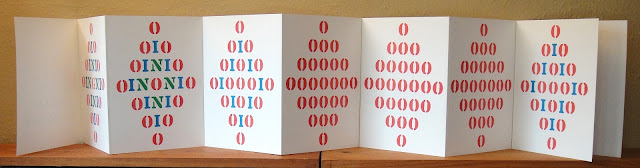
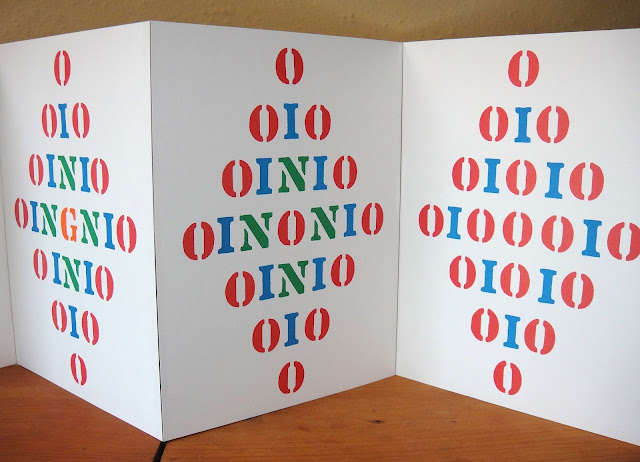
This concrete poem "...represents a top that spins from slow to fast to slow as the reader moves through the book. The colors and letters (comprising an obliquely glimpsed word) change in accordance with each page to notate the speed of the spinning top. Produced as an accordion fold with taped seams, TOP can be read as a book or unfolded to stand on a shelf or table." [quote from the statement on back page of the work].

From a purely technical and formal point of view, this beautiful accordion is made up of a portfolio of individual prints taped together at the seams. While the front and back pages are taped inside and back, the inside pages are only taped on the inside, producing the rather strange sensation of a sticky binding when you run your fingers along the outside edge.

10 single-sided pages (except for last page), individual pages 11" x 8.5", and when fully opened 7' 1".

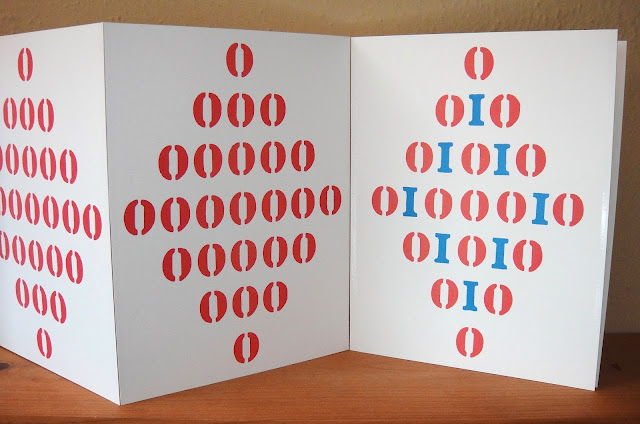
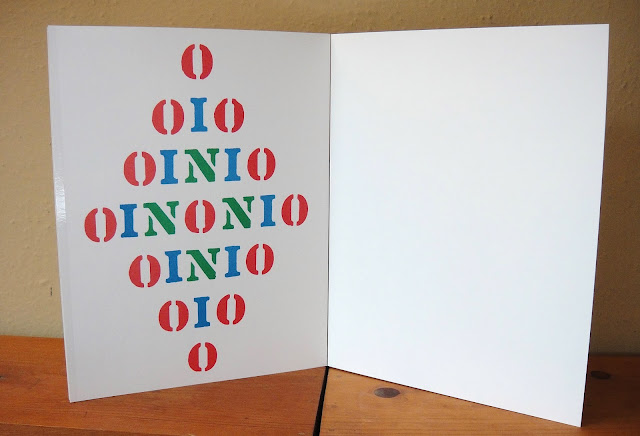
last page of work
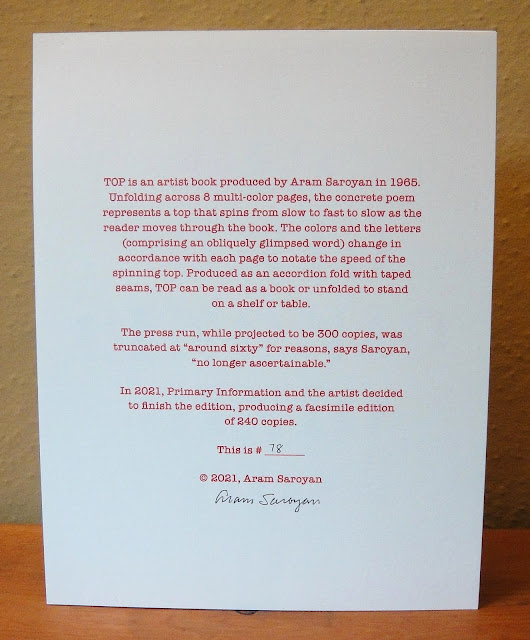
back page

Wednesday, November 3, 2021

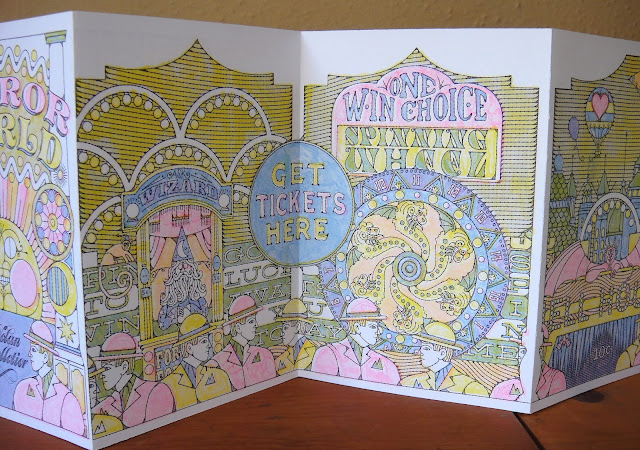
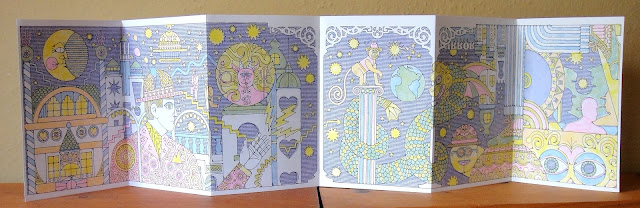
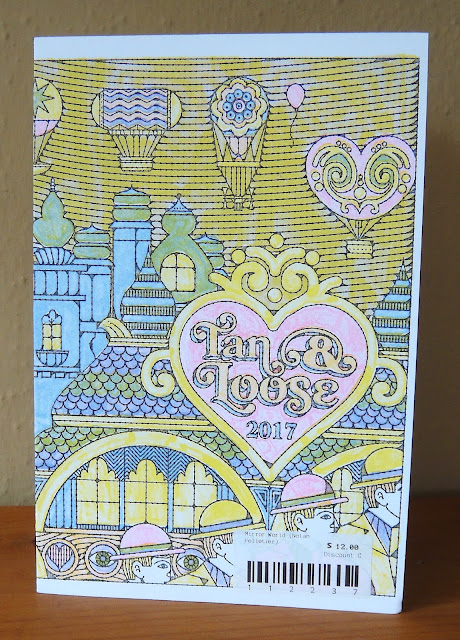
Nolan Pelletier, Mirror World, Tan & Loose Press, Los Angeles, 2017, ed. 500


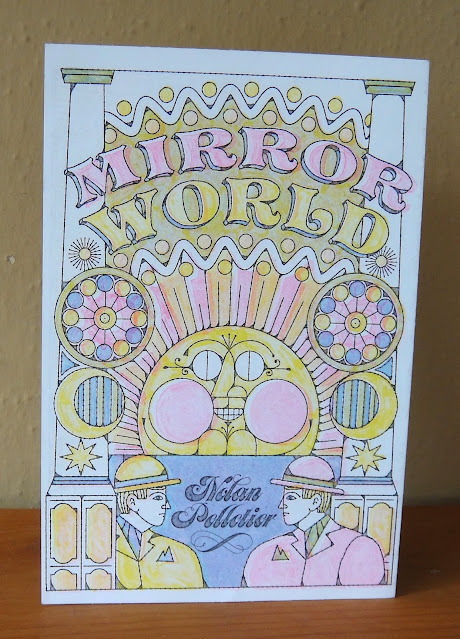
This Toronto based illustrator says of Mirror World that "It's fun being able to curate a tiny world and populate it with things you love...that was the main impetus behind Mirror World, putting a bunch of the carnival and dream imagery that was rattling around in my head to paper. I like that with art you can collect the old things you love, while simultaneously creating something new. It's therapeutic."  Inspired by the architecture of Coney Island and carnival signage he states "I love how overwhelming, colourful and electric carnivals are and wanted to capture a bit of that energy. Even though they're still images, I want all the art I do to vibrate with movement and pattern."

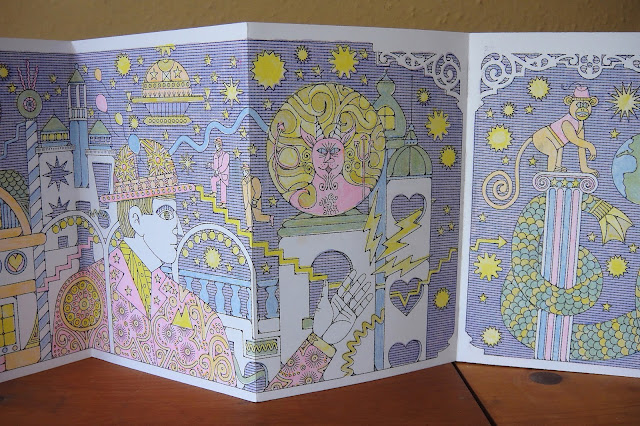
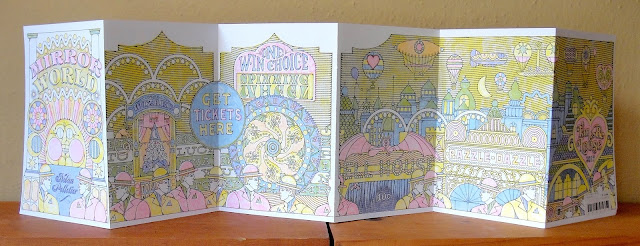
Further in his interview with Lucy Bourton (Itsnicethat.com, March, 12, 2018) he notes that "The front side of Mirror World features a crowd of identical men wearing pink and yellow suits and bowler hats. Something about the repetition of the bowler men was mesmerizing to me, and so I just kept repeating them...the back side is a distorted vision of the same scene where everything is reversed—day is night, the scale has changed and buildings are merging etc... As it progresses from left to right, the scene gets more and more surreal until in the final panel it breaks down completely."

6 double-sided pages, individual page 8" x 5.5", and when opened 2' 9".


reverse side


back cover

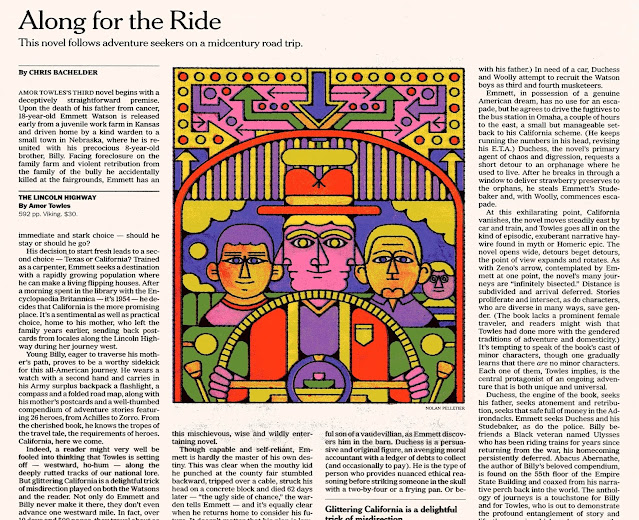
below is a recent illustration of Pelletier's that was published in the 
New York Times Book Review, Sunday, Nov., 7, 2021


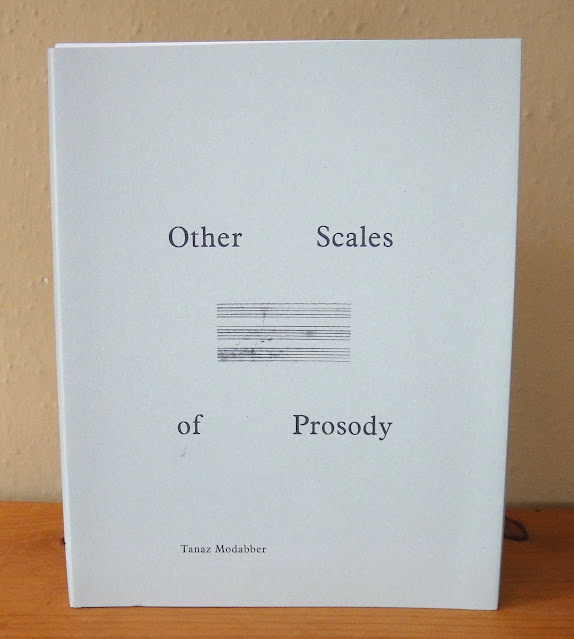
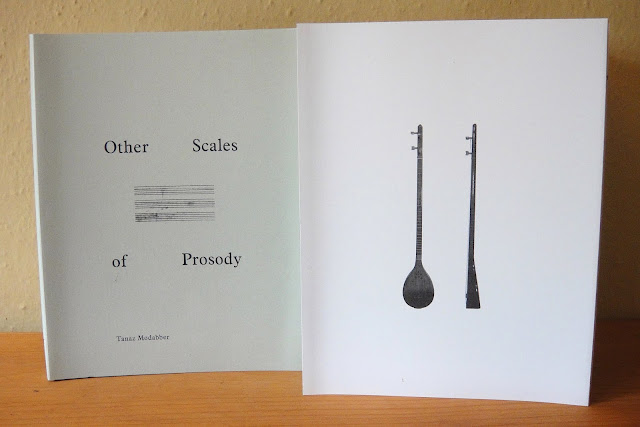
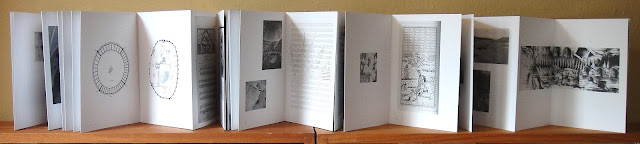
Tanaz Modabber, Other Scales of Prosody, Bombdiabooks, Berlin, Germany, 2017, ed. 500


Tanaz Modabber is an Iranian artist and architect living in Berlin. She graduated from the University of California, Berkeley with a BA in Landscape Architecture and an MA in Architecture. Her practice is involved with site-specific installations, intimate studio works, and architecture projects that have been influenced by her training in both Western and Persian classical music. [from introduction]

The definition of 'prosody' is the patterns of rhythm and sound used in poetry, and the patterns of stress and intonation in a language. Presumably this also includes music as well!

This publication also includes a 5 page double-sided accordion with a text by Cassandra Edlefsen Lasch titled "Meter As Meter As," that explores in greater depth Modabber's artistic practice.
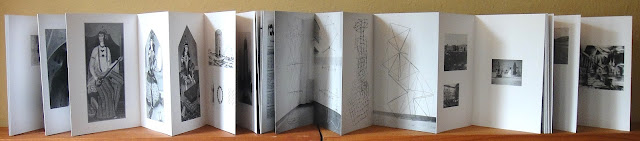
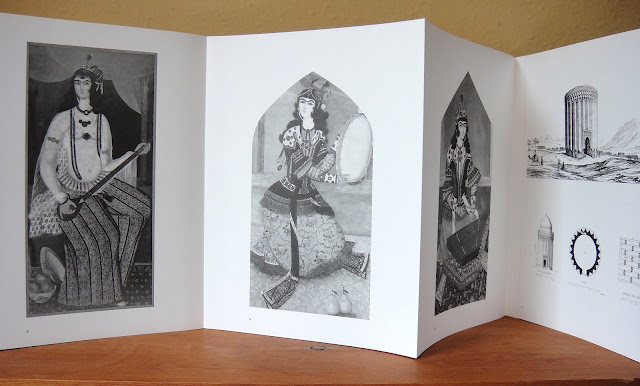
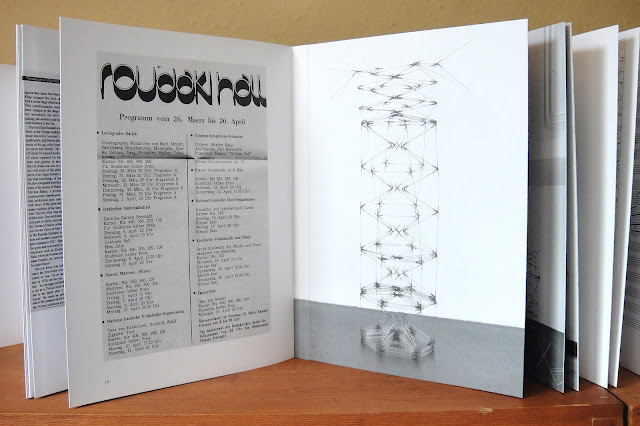
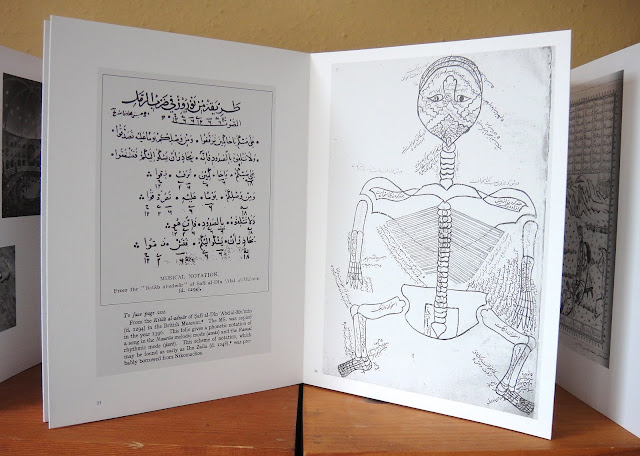
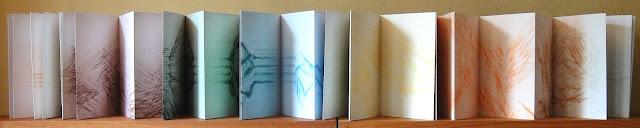
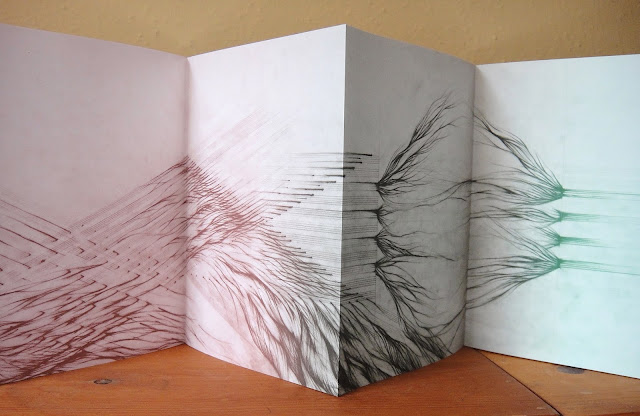
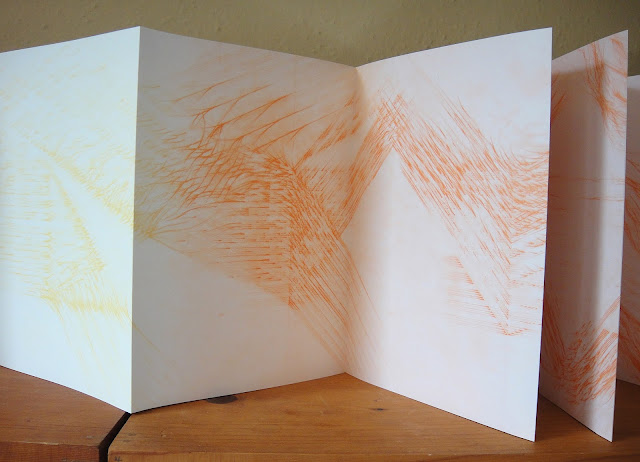
The front side of this accordion is really a historical overview of Persian music, instruments, composition and features images and writings exploring this theme. The reverse side of this features a scroll-like drawing that "considers the principles of Persian classical music, such as cyclicality, continuity, rhythmic structure, and improvisation. This homonymous publication has been compiled through multiple stages of translation, from a geometric foldable structure, over mapping and transcription, to a sound composition." [artists' statement]

This brief introduction to this quite complex accordion really does not do justice to what Modabber is attempting to do here, and it can only serve to give a glimpse of the rich history that Modabber is documenting here. 

44 double-sided pages, individual pages 9" x 7" and when fully opened 25' 8".

accordion with cover


reverse side


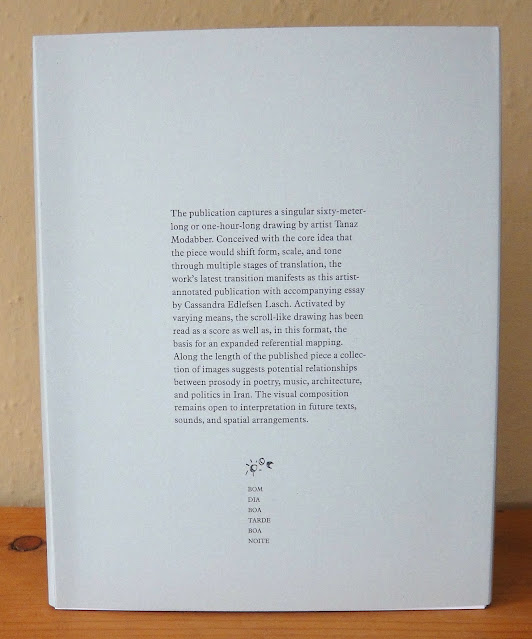
statement about the publication


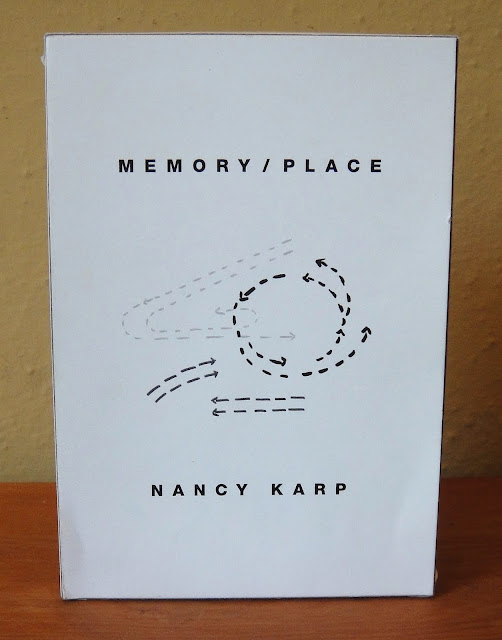
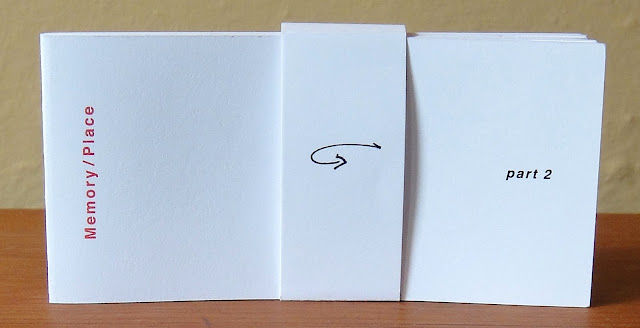
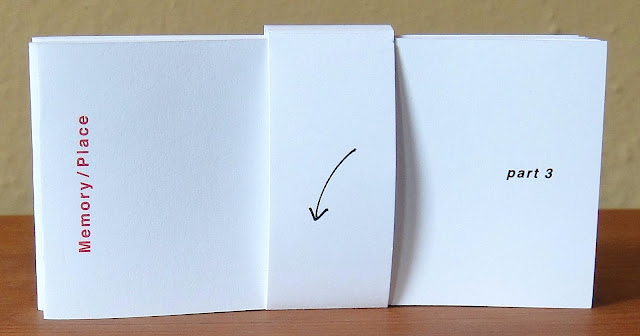
Nancy Karp, Memory/Place, self-published, 2018, ed. 50


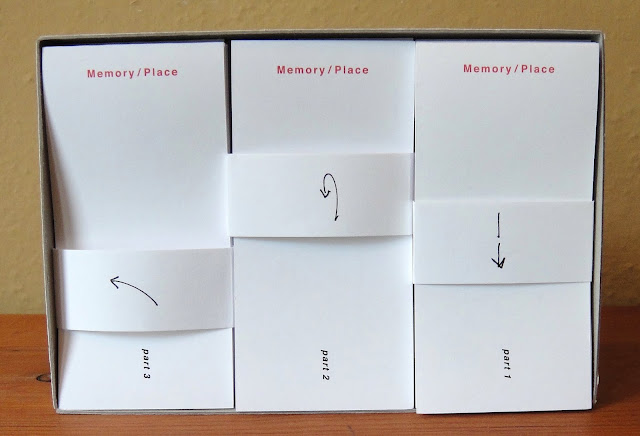
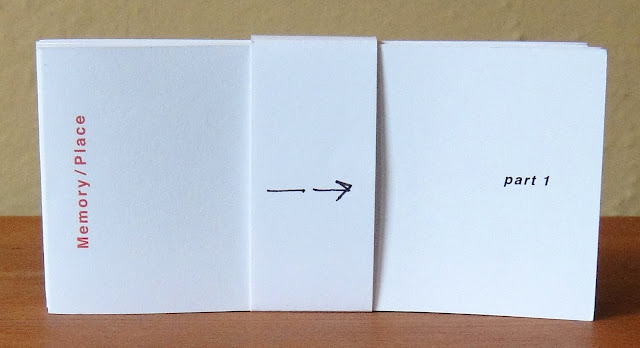
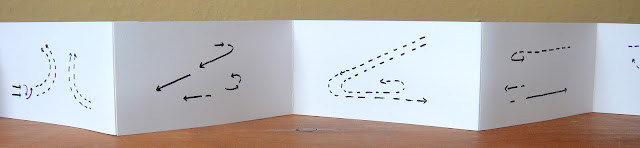
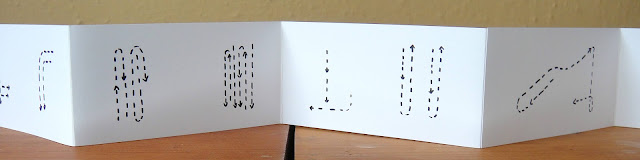
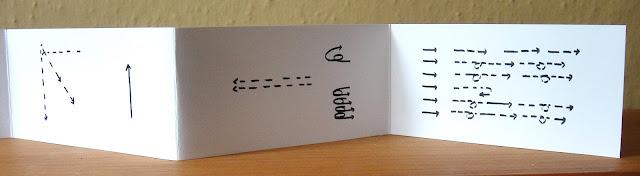
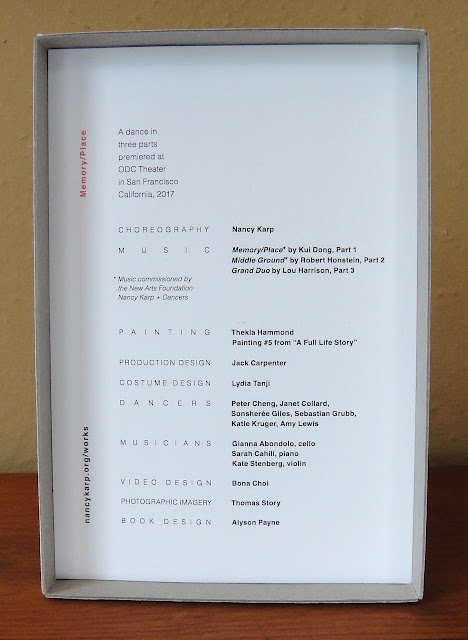
A rather unique series of accordions that records the choreography of this three-part dance by Karp. The work was performed at the ODC Theater in San Francisco in 2017.

Below is the statement by Karp that is included as a separate sheet inserted into the box: 

"These three leporellos are visualizations of the dance Memory/Place. They represent the patterns made by the dancers in each of the three sections of the work. I devised this scoring method in 1978 to record the patterns of my dances as they developed in rehearsal. The drawings chosen for this edition do not attempt to cover the entire work, but rather key moments from the dance. The drawings have been sequenced consecutively but are not intended necessarily to flow into one another. They illustrate single moments in time." (2018)

Individual accordions: 10 pages single-sided, individual pages 2.25" x 4.5" and when fully open 3' 9".


inside the back cover


Tuesday, November 2, 2021

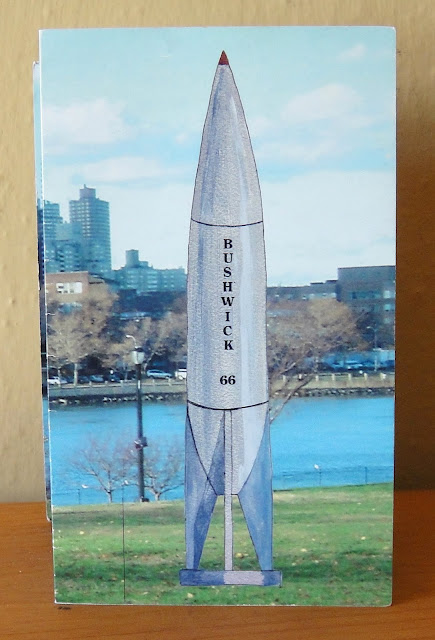
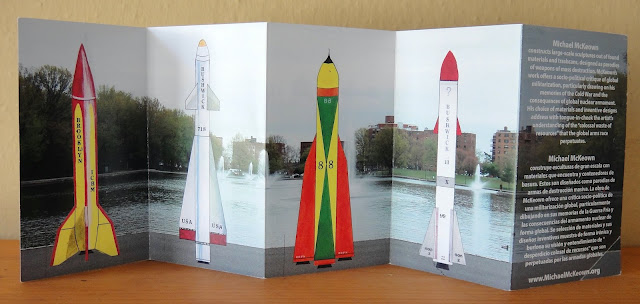
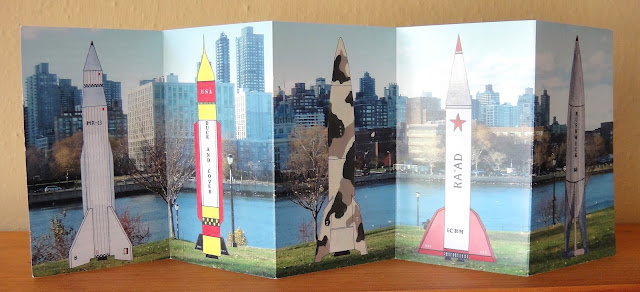
Michael McKeown, Bushwick 66, self-published, nd


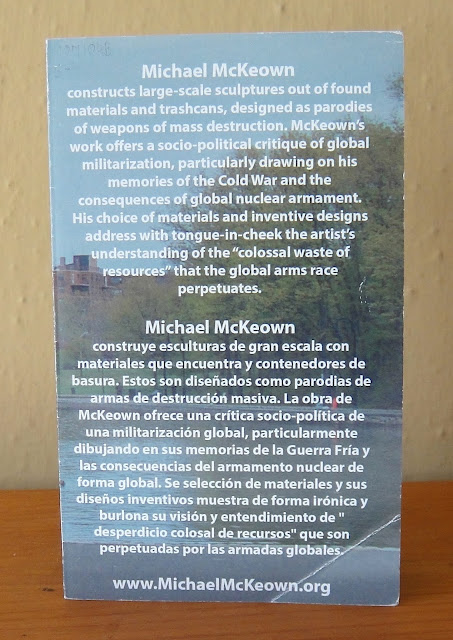
The statement on the back cover of this accordion explains everything about this unique area of McKeown's artistic practice!

"Michael McKeown constructs large-scale sculptures of found materials and trashcans, designed as parodies of weapons of mass destruction. McKeown's work offers a socio-political critique of global militarization, particularly drawing on his memories of the Cold War and the consequences of global nuclear armament. His choice of materials and inventive designs address with tongue-in-cheek the artist's understanding of the "colossal waste of resources" that the global arms race perpetuates."

5 pages double-sided, individual pages 6" x 3.5" and when fully open 1' 5.5".


reverse side

back cover


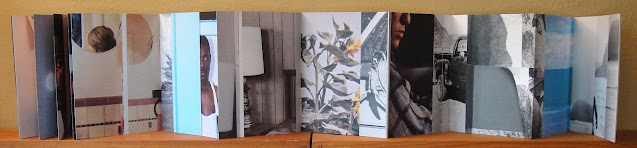
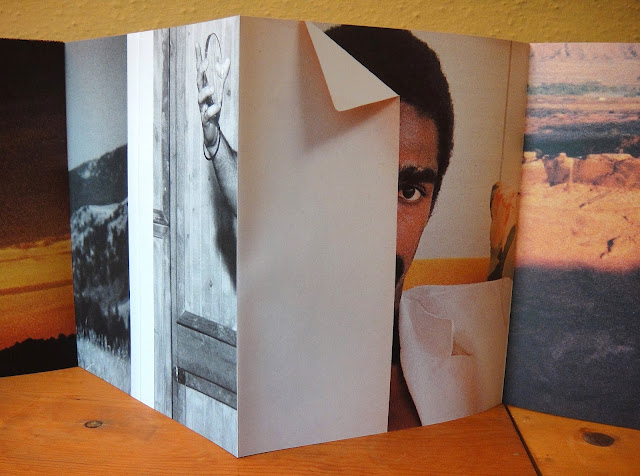
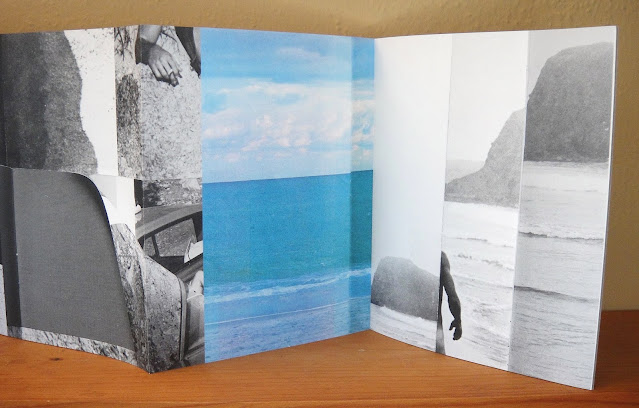
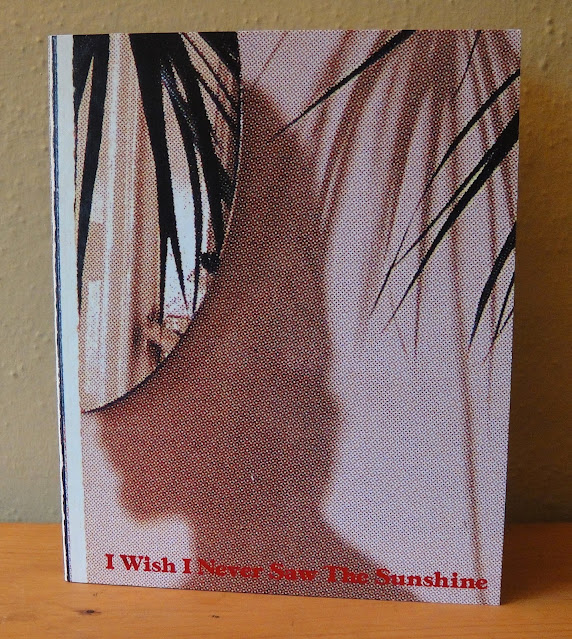
Pacifico Silano, I Wish I Never Saw The Sunshine, Loose Joints, London, UK, 2021


This is a really smart conceptually-based accordion that reworks gay printed ephemera in a manner that really utilizes the opportunities opened up by the accordion format. Also included in this book is a very informative interview conducted with Silano by José Diaz about his interests and the larger background to this book. This accordion is named after the 1976 song by the Ronettes which is about a girl who's devastated at the ending of a love affair, and these themes resonate throughout Silano's book as well.

Below is a really concise synopsis of the book that I found on the website 'Grenade in a Jar Books' (grenadinajar.com) by an anonymous author.

"American conceptual artist Pacifico Silano’s practice is rooted in excavating the printed ephemera of gay culture to create new images that comment on loss, longing and queer melancholy. In particular, Silano uses the gestures of framing, cropping and layering vintage gay erotica to comment on the HIV/AIDS crisis and its reverberations on queer lives, which included the loss of the artist's uncle at the height of the epidemic.
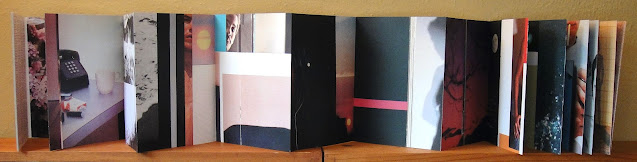
I Wish I Never Saw the Sunshine is Silano’s first artist’s book, and engages with an ambitious accordion-folded format that references Silano’s photo-based installations: two twenty-panel long sequences that can be read as both one continuous collage and a sequence of individual images. Included in the book is an interview with the artist by José Diaz, Chief Curator of The Andy Warhol Museum."
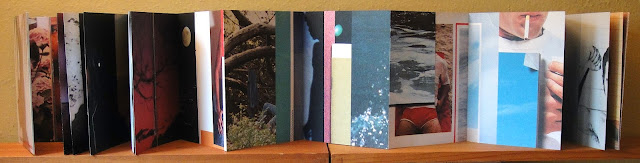
39 pages in total, double-sided, individual pages 10" x 8", and when fully open 26'.


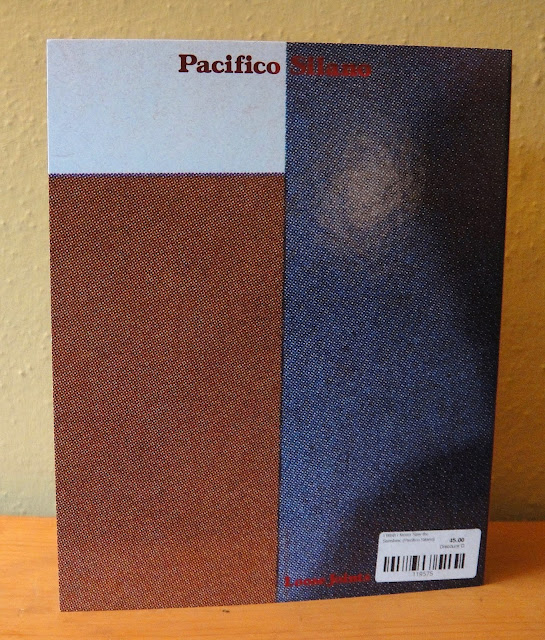
back cover