Thursday, October 14, 2021

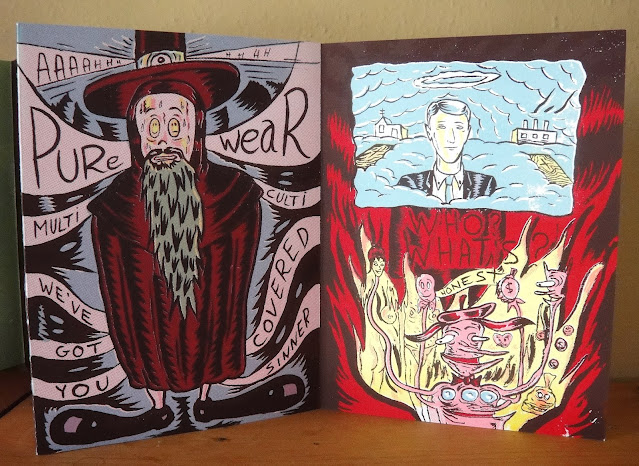
David Sandlin, Pur-Ton-O-Fun-Co. Scatalog, Vol. 1, 2011; Vol. 3, 2015; and Vol. 4, nd; screenprint, New York City

Pur-Ton-O-Fun-Co. Scatalog Volume 1, 2015


reverse side of work

back cover

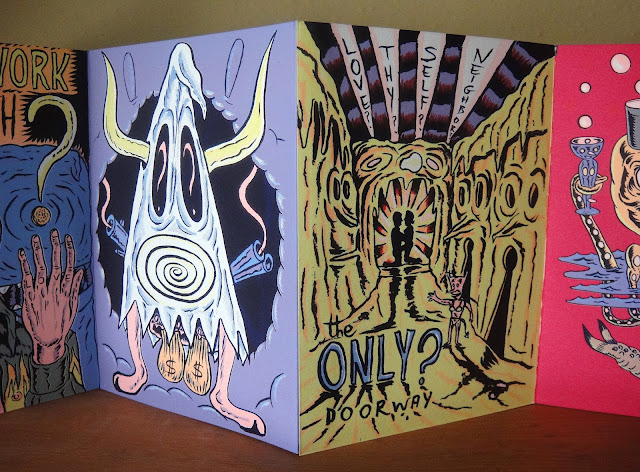
Pur-Ton-O-Fun-Co. Scatalog Volume 3, 2015, ed. 30



back cover

Pur-Ton-O-Fun-Co. Scatalog Volume 4, nd, ed. 10


back cover

These are three really wild and gritty silkscreened accordions that reveal the underlying simplicity of the accordion format as a simple sheet of printed and folded paper. There's a real sense of tactility and 'thingness' as you hold these lively and energetic works in your hands.

Sandlin was born in Belfast in 1956 to an Irish mother and an American father who was an army veteran from rural Alabama. In 1972 at the height of the civil unrest in Northern Ireland the family moves to the USA to Birmingham, Alabama. Later, Sandlin attends the University of Alabama, Birmingham and soon after graduating in 1979 he moves to New York where he's remained ever since. 

All three of these works are hilarious takedowns of the Protestant philosophy (Puritan-Ton-Of-Fun-Co) and the characters are all haunted & tortured in varying degrees by the temptations of the devil and his invitation to a life of sinfulness. This is rich material and Sandlin's developed a really edgy style that increases the torque and effect of these works' messages, all of which are dashed through with a refreshing dose of humor. A similar aesthetic can be seen in the many artists' books that Sandlin has published with a similar biting and critical point of view.

In a statement from 2008 Sandlin addresses the themes in his work, "My obsession with exploring American Puritanism was already full-blown by the time I went to college, where I'd go to sleazy country music clubs...and see people who would just go absolutely crazy drinking and carousing on Saturday night, then get up and go to some little Baptist church the next morning and get born again." 

All three publications consist of 9 silkscreened single-sided pages, with individual pages measuring 9.25" x 7" for Vols. 3 & 4, and for Vol. 1, 9" x 6.5". When opened up the first two works measure 5' 3" and Vol. 1, measures 4' 10.5" . Note: Vol. #1 has work on both sides of the piece, while the other two are both one-sided.

Wednesday, October 13, 2021

Francis Ambler, Mid-Century Modern: Icons of Design, Thames & Hudson, 2016


side view and back cover of boxed set

This is a really smart and well designed 4 accordion introduction to different features of mid-century design. The four accordions cover the following areas: Tables & Storage, Chairs, Product & Industrial Design and Lighting. One side of each booklet features images of the products and on the reverse there is more detailed information about each item. Remarkably this publication is available on Amazon for $10!

Each accordion: 16 double-sided pages, individual 6.25" x 4.5" and when fully opened 6ft.

Tables & Storage


detail

reverse side detail

Chairs


Product & Industrial Design


Lighting


Tuesday, October 12, 2021

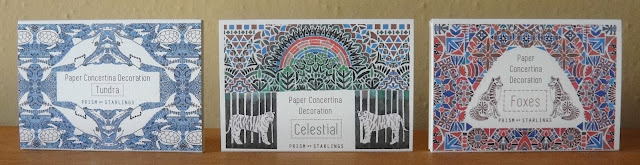
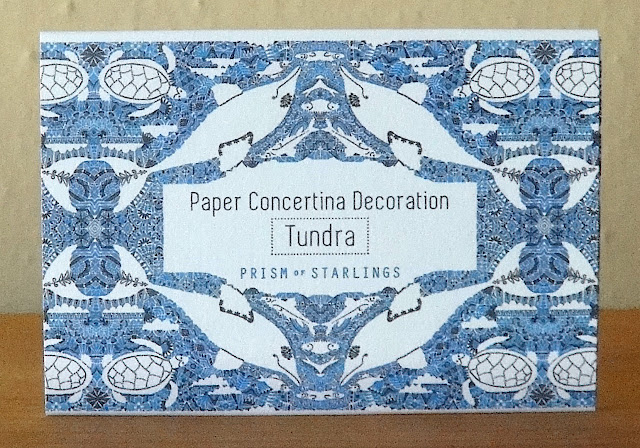
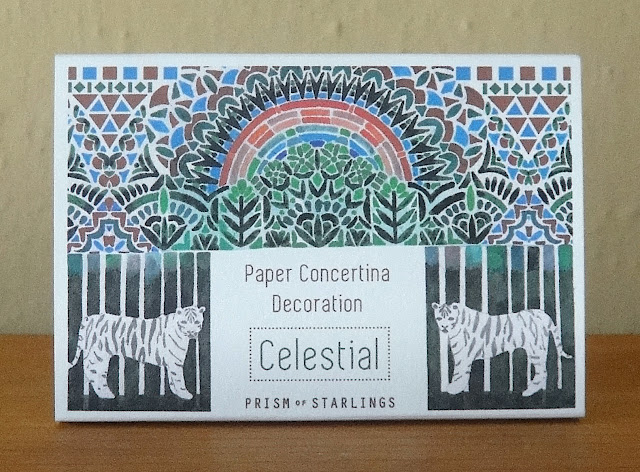
Prism of Starlings, Celestial, Foxes, Tundra (3 accordions), Edinburgh, Scotland, nd


front cover


back cover

front cover


back cover

front cover


back cover

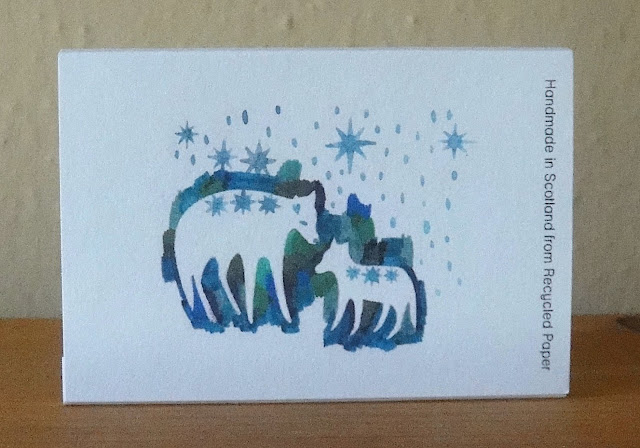
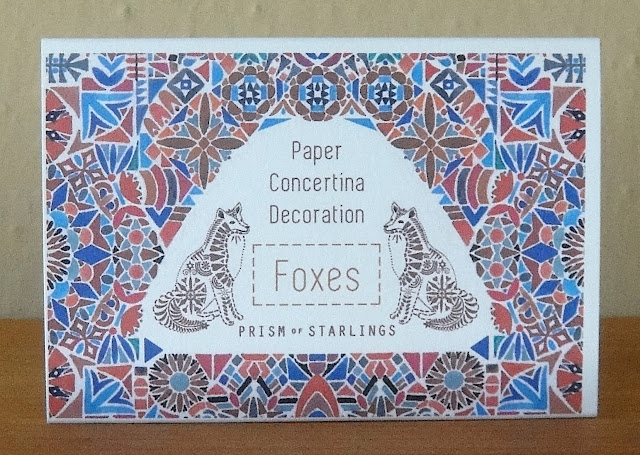
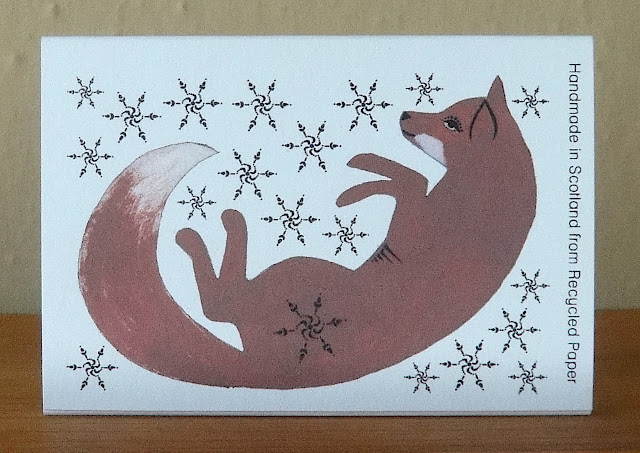
These are just 3 delightful little accordions of wonder & nature, both sensitive and caring, and beautifully drawn — just holding one in your hands gives you a good feeling. I'm going to include here a statement titled "Prism of Starlings Story: Woodland Creatures and Geometric Forests " on Prism of Starlings' website, as I think it describes very succinctly what the artist is all about.

"Prism of Starlings is a collection of hand-made, illustrated products and ephemera for stationary lovers.

The brand is stylistically defined by a combination of two main elements - 'prism', which represents geometry and symmetry, and 'starlings', representing the strong animal theme to my designs and their importance to me both as an artist and as an individual. My artwork combines my passion for mathematically precise patternmaking and my love of colourful abstract art.

My illustrations depict animals composed of intricate shapes and patterns, their homes and habitats expressed by a combination of casual brushstroke and meticulous geometry, often using negative space to create shapes and landscapes. My favourite things to illustrate are foxes and woodland animals, dense forests filled with geometric trees, start-studded skies and celestial bodies. Ever since I was a young child, I've enjoyed the tactile and poetic process of crafting things from paper, like little houses, sailboats and books.

All my materials are carefully chosen with a strong focus on ethical, environmentally low-impact processes, without compromising on quality or texture, so that you can share and use my materials with a clear conscience. Most of the packaging I use is compostable, and the papers I use are all made from recycled fibers. I also make most of my products to order by hand in my workshop, reducing waste and localising production."

All three books are the same dimensions: 6 double-sided pages, 2.75" x 4", and when fully open 2ft.


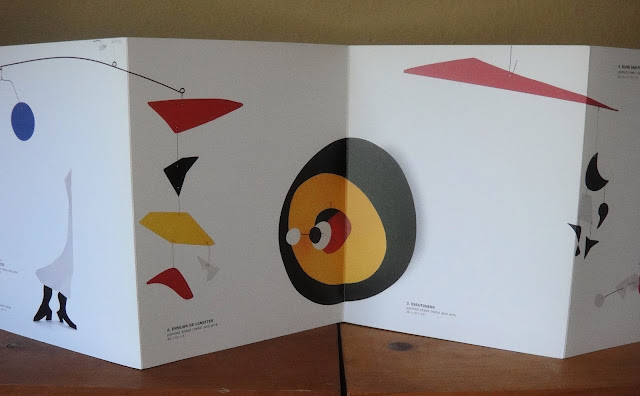
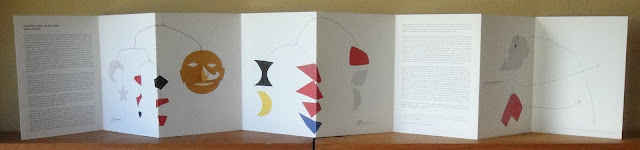
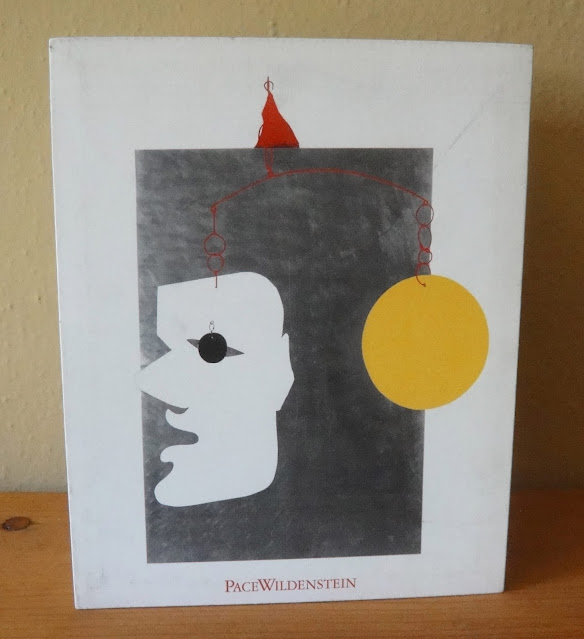
Alexander Calder, "Alexander Calder '76: The Cutouts," February 14 - March 16, PaceWlldenstein, New York City, 2002


                     reverse side


back cover

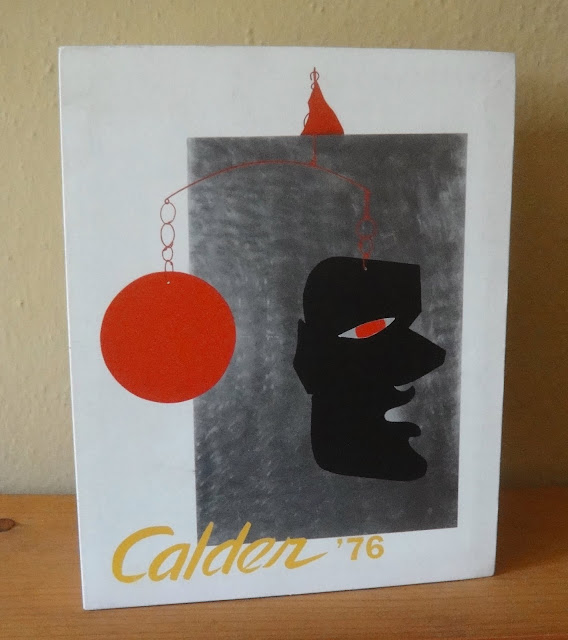
A kind of odd catalogue devoted to a number of small late works that Calder (1989-1976) created in the year of his sudden death. I appreciate the way the design of the catalogue lets the works float in the white space of the page, on both sides
. But despite this, the works look flat. In a short text in the catalogue about these sculptures Mildren Glimcher notes how these works marked a shift from Calder's usual preoccupation with two and three dimensions in space, to one where "...the shapes dominate. They do not seem to have been engineered to move in space; they do not gesture but rather are pinned together, like collages, or the rectangles on Mondrian's studio wall." I think Glimcher correctly pinpoints the source of the rather lackluster affect of this otherwise interesting accordion catalogue. 

6 double-sided pages, individual pages 9.75" x 7.75", and when open 7' 9".