Wednesday, October 13, 2021

Francis Ambler, Mid-Century Modern: Icons of Design, Thames & Hudson, 2016


side view and back cover of boxed set

This is a really smart and well designed 4 accordion introduction to different features of mid-century design. The four accordions cover the following areas: Tables & Storage, Chairs, Product & Industrial Design and Lighting. One side of each booklet features images of the products and on the reverse there is more detailed information about each item. Remarkably this publication is available on Amazon for $10!

Each accordion: 16 double-sided pages, individual 6.25" x 4.5" and when fully opened 6ft.

Tables & Storage


detail

reverse side detail

Chairs


Product & Industrial Design


Lighting


Tuesday, October 12, 2021

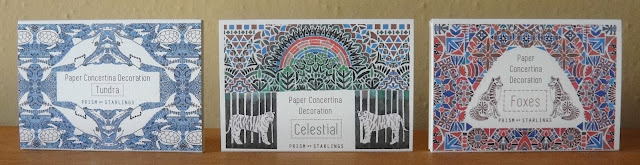
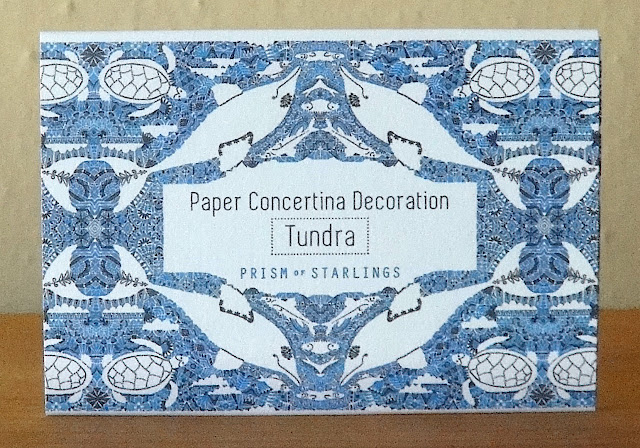
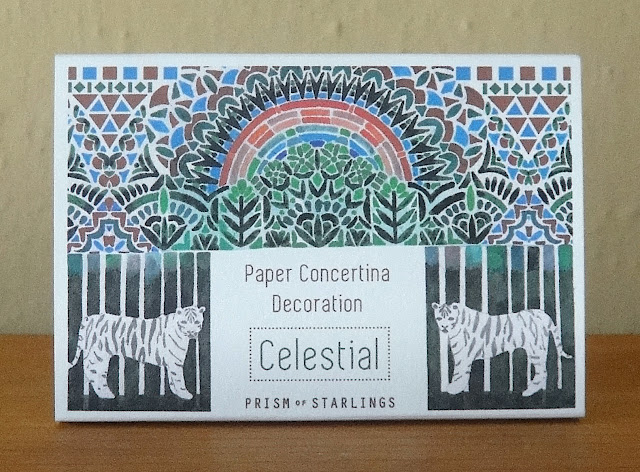
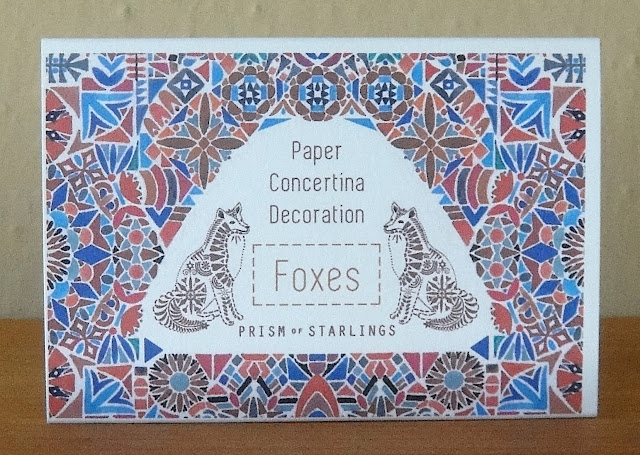
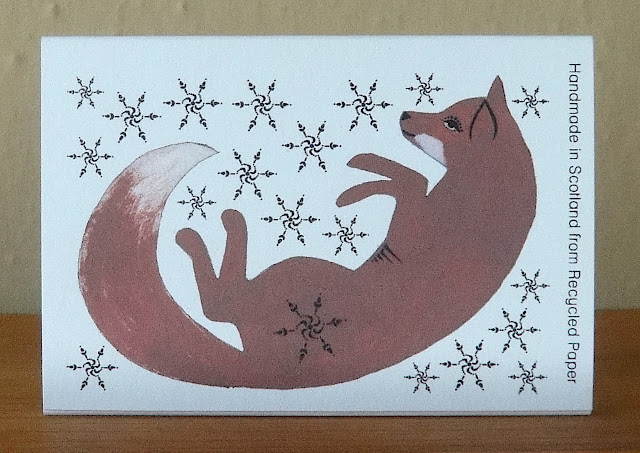
Prism of Starlings, Celestial, Foxes, Tundra (3 accordions), Edinburgh, Scotland, nd


front cover


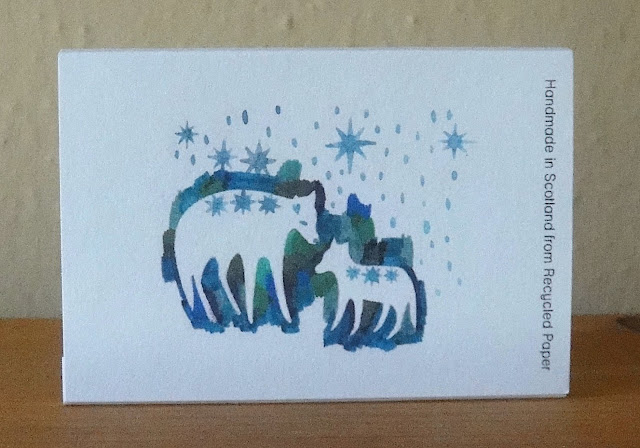
back cover

front cover


back cover

front cover


back cover

These are just 3 delightful little accordions of wonder & nature, both sensitive and caring, and beautifully drawn — just holding one in your hands gives you a good feeling. I'm going to include here a statement titled "Prism of Starlings Story: Woodland Creatures and Geometric Forests " on Prism of Starlings' website, as I think it describes very succinctly what the artist is all about.

"Prism of Starlings is a collection of hand-made, illustrated products and ephemera for stationary lovers.

The brand is stylistically defined by a combination of two main elements - 'prism', which represents geometry and symmetry, and 'starlings', representing the strong animal theme to my designs and their importance to me both as an artist and as an individual. My artwork combines my passion for mathematically precise patternmaking and my love of colourful abstract art.

My illustrations depict animals composed of intricate shapes and patterns, their homes and habitats expressed by a combination of casual brushstroke and meticulous geometry, often using negative space to create shapes and landscapes. My favourite things to illustrate are foxes and woodland animals, dense forests filled with geometric trees, start-studded skies and celestial bodies. Ever since I was a young child, I've enjoyed the tactile and poetic process of crafting things from paper, like little houses, sailboats and books.

All my materials are carefully chosen with a strong focus on ethical, environmentally low-impact processes, without compromising on quality or texture, so that you can share and use my materials with a clear conscience. Most of the packaging I use is compostable, and the papers I use are all made from recycled fibers. I also make most of my products to order by hand in my workshop, reducing waste and localising production."

All three books are the same dimensions: 6 double-sided pages, 2.75" x 4", and when fully open 2ft.


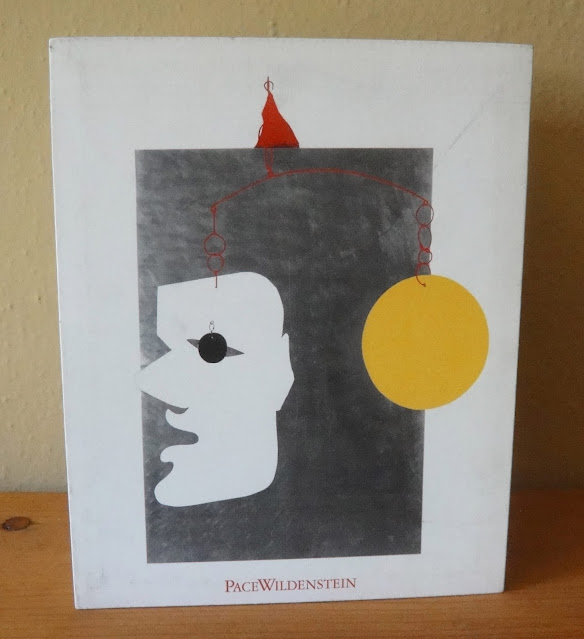
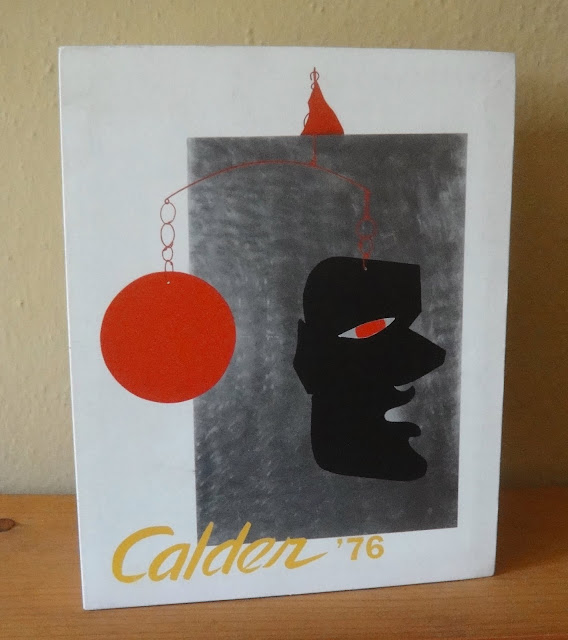
Alexander Calder, "Alexander Calder '76: The Cutouts," February 14 - March 16, PaceWlldenstein, New York City, 2002


                     reverse side


back cover

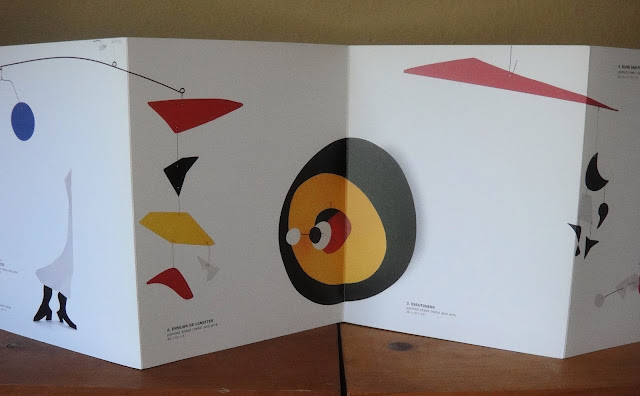
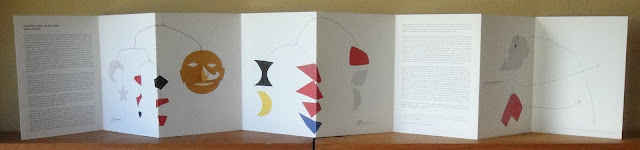
A kind of odd catalogue devoted to a number of small late works that Calder (1989-1976) created in the year of his sudden death. I appreciate the way the design of the catalogue lets the works float in the white space of the page, on both sides
. But despite this, the works look flat. In a short text in the catalogue about these sculptures Mildren Glimcher notes how these works marked a shift from Calder's usual preoccupation with two and three dimensions in space, to one where "...the shapes dominate. They do not seem to have been engineered to move in space; they do not gesture but rather are pinned together, like collages, or the rectangles on Mondrian's studio wall." I think Glimcher correctly pinpoints the source of the rather lackluster affect of this otherwise interesting accordion catalogue. 

6 double-sided pages, individual pages 9.75" x 7.75", and when open 7' 9".


Friday, April 30, 2021

John Held Jr., L'Arte del Timbro (Rubber Stamp Art), San Francisco, 2021


Another cool accordion book from John Held Jr., an important mail art historian, rubber stamp artist and collector of both. On one side of this accordion there's a really nice selection of John's rubber stamps which feature self-portraits, publicity for events & performances, and a couple promoting his important book "Mail Art: An Annotated Bibliography" (1991). At the end there's two stamps from the San Francisco alternative space, La Mamelle (1975-1997), and their Imagezine magazine which was published in the form of a rubber stamp. Of this unique magazine format the editors stated, "If publishing is the making public of information, then affixing an Imagezine imprint upon a surface is an act of art publishing."

The other side of this accordion features cool crop circle rubber stamps by Rocola, a long time mail artist and Bay Area resident. John sent me some photographs of Rocola's stamps, and they're not your typical stamps glued to a block of wood, but much more sculptural and can be considered works in themselves. See some at the end of this post.
42 pages, double-sided, individual pages 6" x 4.25", and when fully opened 7' 5.25".

The stamp on the left depicts the head of Shozo Shimamoto (1928-2013), a member of the Japanese Gutai avant-garde art movement (1954-1972) and an experimental artist to the end.


two copies of Imagezine can be seen on the page at the right


the reverse side


Rocola's crop circle rubber stamps, plus one of his well-known 'cow' stamps